Hire Gastronoble API WooCommerce Expert

Hire Gastronoble API WooCommerce Expert

Gastronoble WooCommerce Dropshipping & Inventory Sync for WordPress (WooCommerce Plugin Integration Case Study)

Gastronoble WooCommerce integration, dropshipping API WooCommerce, inventory sync WooCommerce plugin, real-time stock update WooCommerce, supplier API order automation

Modern eCommerce stores in the hospitality and restaurant supply industry rely heavily on real-time inventory accuracy and automated order processing.

I recently implemented a full WooCommerce + Gastronoble integration system for the websites:

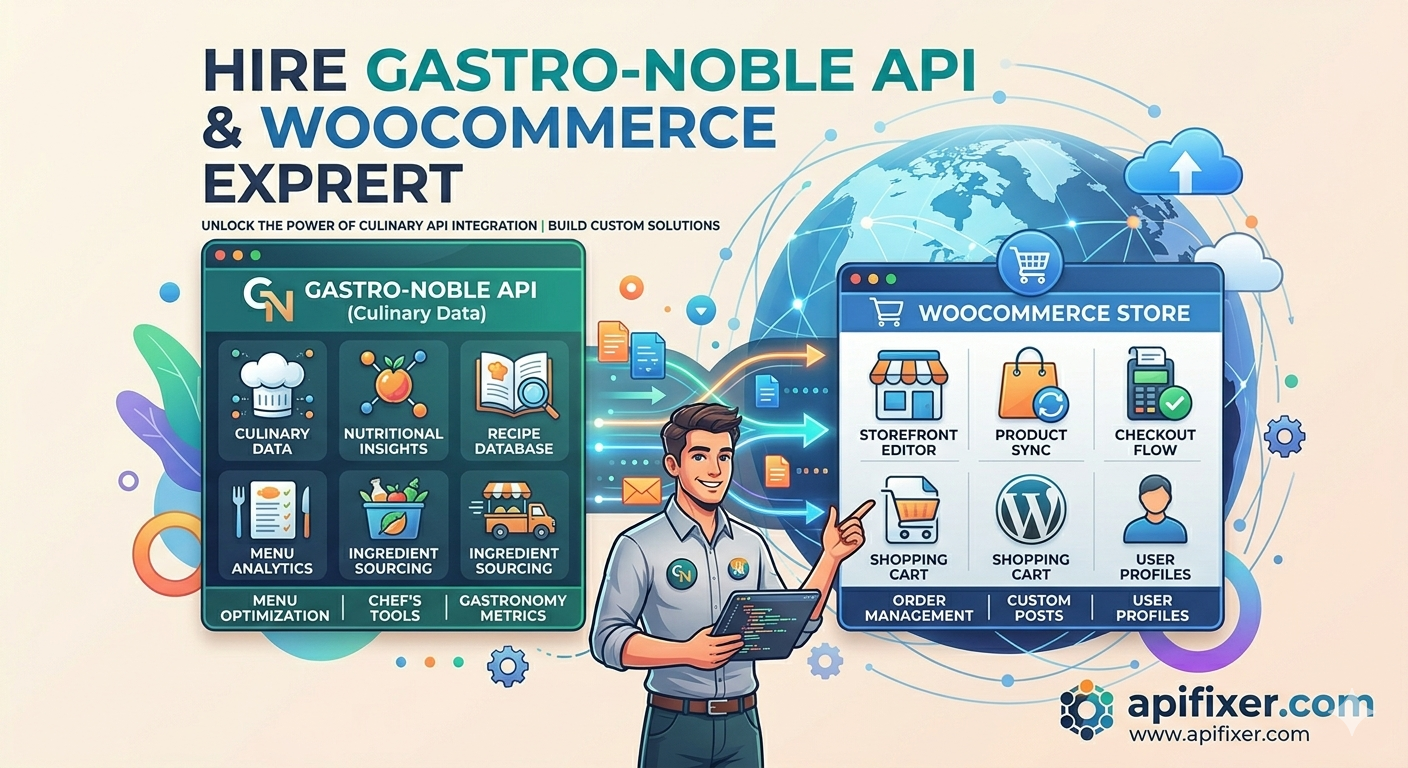
The goal was to create a fully automated dropshipping and inventory synchronization engine between WooCommerce and the Gastronoble supplier API:

πŸ”— Gastronoble API Swagger Documentation


The Business Problem

Before automation, the client faced typical supplier-sync challenges:

  • inventory mismatches between supplier and website
  • out-of-stock products still visible online
  • manual product updates consuming time
  • delayed stock visibility for customers
  • order processing done manually

In dropshipping environments, even a small delay in stock updates can cause:

  • overselling products
  • refunds and cancellations
  • customer dissatisfaction
  • logistics confusion

The system needed to be fully automated, fast, and reliable.


The Solution: Custom WooCommerce Gastronoble Sync Plugin

I developed a custom WordPress plugin that acts as a middleware layer between:

  • WooCommerce store (horeca-winkel.shop / horeca-winkel.be)
  • Gastronoble supplier API

The plugin handles the entire product lifecycle:

  • product import
  • inventory updates
  • stock status synchronization
  • product deletion handling
  • order forwarding (dropshipping automation)

How the Inventory Sync System Works

1. Product Import from Gastronoble API

The system pulls full product data from the Gastronoble API including:

  • product titles and descriptions
  • pricing and variants
  • stock availability
  • SKU mapping
  • category structure
  • product images

Each product is normalized before insertion into WooCommerce.


2. Smart Database Storage with Hashing

Instead of repeatedly overwriting all products, I implemented a hash-based comparison system.

Each product is stored in a custom WooCommerce database table in hashed format, allowing the system to detect:

  • new products
  • updated products
  • deleted products
  • unchanged products (skipped for performance)

This ensures:

  • minimal database load
  • faster sync cycles
  • reduced server overhead
  • efficient large catalog handling

3. Real-Time Stock Synchronization

The plugin continuously synchronizes inventory status from Gastronoble.

Whenever stock changes occur at the supplier level:

  • WooCommerce stock is updated automatically
  • products are marked in-stock / out-of-stock
  • visibility is adjusted in real time

This ensures customers only see accurate product availability at all times.


4. Automatic Insert, Update & Delete Logic

Operation System Behavior
Insert New supplier products are added automatically to WooCommerce
Update Existing products are updated only if data has changed (hash comparison)
Delete Removed supplier products are automatically removed or hidden from store

5. Order Forwarding to Gastronoble (Dropshipping Automation)

Once a customer places an order on WooCommerce, the system automatically:

  • captures order details
  • maps WooCommerce SKUs to Gastronoble product IDs
  • formats order payload
  • posts order to Gastronoble API

This enables fully automated dropshipping fulfillment through:

πŸ”— Gastronoble Order API (Swagger)

No manual order processing is required.


Stock Status Intelligence (In Stock / Out of Stock Automation)

The system continuously evaluates stock states and automatically updates WooCommerce product visibility:

  • instock β†’ visible + purchasable
  • outofstock β†’ hidden or marked unavailable
  • low stock β†’ optional threshold alerts

This prevents overselling and improves customer trust.


Image Sync & Media Optimization

All product images from Gastronoble are automatically:

  • downloaded into WordPress media library
  • assigned as featured images
  • mapped into product galleries
  • optimized with proper filenames

This improves both:

  • SEO performance
  • page load speed
  • product presentation quality

Performance Design Considerations

The system is optimized for large-scale catalog synchronization:

  • batch processing for API calls
  • delta-based updates (no full re-imports)
  • hash comparison instead of full data overwrite
  • scheduled sync cycles (safe 5-minute interval)

This ensures stable performance even with thousands of products.


Why Custom WooCommerce Integration Matters

Generic plugins often fail in complex supplier environments because they:

  • lack real-time update handling
  • re-import entire catalogs repeatedly
  • do not support order forwarding APIs
  • cannot handle custom supplier logic

A custom integration allows full control over:

  • inventory logic
  • data mapping
  • performance optimization
  • dropshipping workflows

Related Work & Integration Reference

I have also worked on similar CRM and API synchronization systems. You can view another related implementation here:

πŸ”— Miogest CRM WordPress Integration Case Study


Who This Solution Is For

This type of system is ideal for:

  • hospitality supply stores
  • B2B wholesale WooCommerce stores
  • dropshipping businesses
  • supplier-based eCommerce platforms
  • multi-vendor inventory systems

Why Work With Me?

I specialize in building advanced WooCommerce automation systems including:

  • supplier API integrations
  • real-time inventory synchronization
  • dropshipping automation workflows
  • custom WooCommerce plugin development
  • ERP and CRM integrations
  • large-scale product data pipelines

My focus is building systems that are not just functional β€” but scalable, optimized, and production-ready.


Frequently Asked Questions (FAQ)

Q: Does the system support real-time inventory updates?
Yes. Stock levels are continuously synchronized from Gastronoble API.

Q: Can orders be automatically sent to the supplier?
Yes. WooCommerce orders are automatically forwarded to Gastronoble API for fulfillment.

Q: Does it prevent overselling?
Yes. Stock status is updated in real time, ensuring accurate availability.

Q: Can this handle large product catalogs?
Yes. The system uses hashed delta-based updates to optimize performance.

Q: Is this a plugin or custom system?
It is a custom-built WordPress plugin tailored specifically for supplier integration workflows.


Need a Custom WooCommerce Supplier Integration?

If you are looking for:

  • Gastronoble WooCommerce integration
  • supplier API synchronization
  • dropshipping automation system
  • real-time inventory sync plugin
  • custom WooCommerce development

πŸ“© Contact me on Upwork

🎯 Hire me on Fiverr


Automate Your Catering & HoReCa Webshop

European HoReCa API Integration & Catering Webshop Automation for WooCommerce, Shopify & Custom B2B Platforms

European HoReCa API Integration & Catering Webshop Automation for WooCommerce, Shopify & Custom B2B Platforms

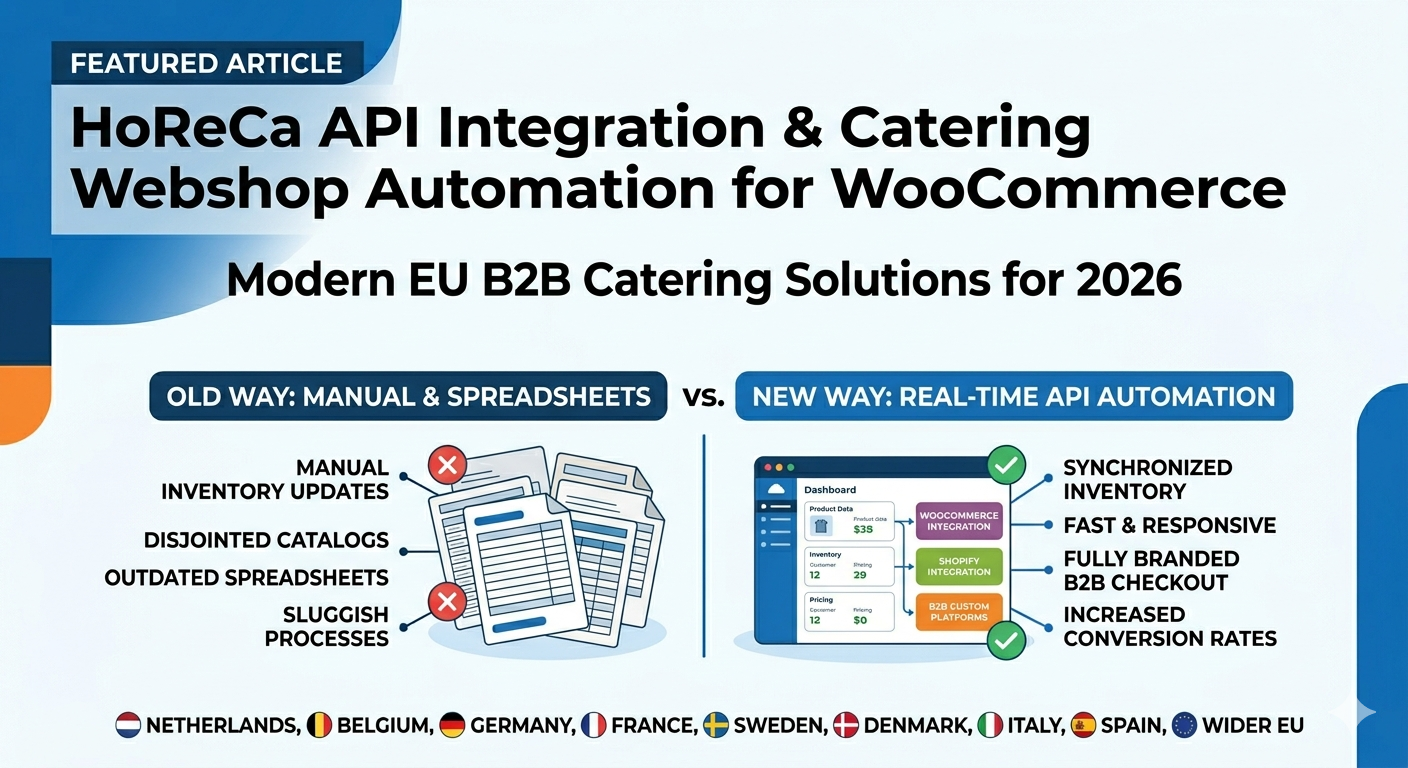
In 2026, European hospitality suppliers, catering wholesalers, restaurant distributors, and HoReCa businesses are rapidly replacing outdated spreadsheets and manual catalog management with real-time API-driven eCommerce automation systems.

Modern businesses across the Netherlands, Belgium, Germany, France, Sweden, Denmark, Italy, Spain, and the wider EU market now synchronize supplier inventory directly into:

  • WooCommerce
  • Shopify
  • Magento
  • Custom Laravel Applications
  • B2B Procurement Portals
  • Hospitality Marketplaces
  • Dropshipping Platforms
  • ERP & Warehouse Systems

If you are searching for:

  • European catering supplier API integration
  • HoReCa WooCommerce automation
  • Shopify supplier synchronization
  • Restaurant equipment dropshipping systems
  • Hospitality inventory middleware
  • Wholesale supplier XML import plugin
  • B2B catering automation software
  • AI-powered hospitality catalog enrichment

then this guide explains how modern synchronization infrastructure works and how suppliers like Gastronoble, Hendi, Sligro, Nisbets, XXLhoreca, Metro, Hanos, Bidfood, Duni, Brakes, Makro, Alliance Online, and other European wholesalers can be connected directly into scalable digital storefronts.


Why Manual Catering Webshop Management No Longer Scales

Many hospitality suppliers still rely on outdated workflows such as:

  • CSV imports
  • Excel spreadsheets
  • Manual product uploads
  • Static XML feeds
  • Human stock updates
  • Manual category mapping
  • Manual image processing
  • Supplier copy-pasting

This creates major operational problems for businesses managing:

  • Commercial kitchen equipment
  • Restaurant supplies
  • Hotel procurement catalogs
  • Catering consumables
  • Industrial refrigeration products
  • Bar equipment
  • Food preparation machinery
  • Wholesale hospitality inventory
  • Dropshipping supplier networks

Without automation, businesses commonly experience:

  • Overselling inventory
  • Outdated stock quantities
  • Incorrect pricing
  • Duplicate products
  • Broken product attributes
  • Poor SEO performance
  • Slow imports
  • Manual order processing bottlenecks
  • Supplier synchronization delays
  • Website performance issues

This is why modern hospitality businesses are increasingly investing in API synchronization systems, middleware architectures, AI automation pipelines, and real-time inventory engines.


What Is a Modern HoReCa API Integration System?

A hospitality API integration system connects supplier databases directly into your eCommerce platform using:

  • REST APIs
  • SOAP APIs
  • XML feeds
  • JSON endpoints
  • EDI integrations
  • SFTP inventory feeds
  • Webhook architectures
  • Middleware synchronization engines

Instead of manually importing products, the system automates:

  • Product imports
  • Inventory synchronization
  • Price updates
  • Image syncing
  • Category mapping
  • Supplier order routing
  • Tracking synchronization
  • Dropshipping fulfillment
  • Warehouse synchronization
  • SEO enrichment
  • Multilingual product generation

Major European HoReCa Suppliers Developers Integrate

Gastronoble API Integration

Gastronoble is one of Europe’s largest hospitality equipment suppliers and wholesalers.

Developers commonly build:

  • WooCommerce supplier sync plugins
  • Shopify catering automation systems
  • B2B procurement marketplaces
  • Dropshipping hospitality stores
  • Custom middleware synchronization engines

Automation workflows may include:

  • Live stock synchronization
  • Automated pricing updates
  • Category normalization
  • Warehouse synchronization
  • Order posting automation
  • Image synchronization
  • AI SEO enrichment

Hendi API Integration

Hendi is one of Europe’s most recognized hospitality equipment suppliers.

Developers integrate Hendi into:

  • WooCommerce catering stores
  • Shopify B2B hospitality stores
  • Restaurant procurement platforms
  • Dropshipping marketplaces
  • ERP synchronization systems

Supported workflows may include:

  • Real-time inventory synchronization
  • Automated stock updates
  • Supplier order routing
  • AI-generated descriptions
  • Dynamic pricing rules
  • Multi-language synchronization

Sligro API Integration

Sligro is one of the largest hospitality wholesalers in the Netherlands and Benelux region.

Synchronization systems commonly support:

  • Wholesale inventory feeds
  • Supplier catalog imports
  • Real-time warehouse lookups
  • B2B pricing automation
  • Order processing automation
  • Supplier dropshipping workflows

Additional European Hospitality Suppliers Often Integrated

  • Nisbets
  • XXLhoreca
  • Makro
  • Metro
  • Alliance Online
  • Brakes
  • Hanos
  • Bidfood
  • Duni
  • Lusini
  • VEGA
  • Bunzl
  • Paderno
  • Chef Works
  • Rieber
  • Winterhalter
  • Rational
  • Electrolux Professional
  • Falcon Foodservice
  • Meiko

WooCommerce vs Shopify for HoReCa Automation

WooCommerce Hospitality Automation

WooCommerce is highly flexible for complex hospitality synchronization workflows because it supports:

  • Custom supplier plugins
  • Advanced B2B pricing
  • Large product catalogs
  • Real-time inventory processing
  • Middleware integrations
  • AI automation systems
  • Custom checkout logic
  • ERP synchronization

WooCommerce works especially well with:

  • Laravel middleware
  • Redis queue systems
  • Supplier synchronization engines
  • AI content pipelines
  • Dropshipping automation systems

Shopify Supplier Synchronization

Shopify provides cloud-based infrastructure for hospitality businesses wanting simplified deployment.

Shopify integrations commonly support:

  • Supplier inventory synchronization
  • Automated product publishing
  • Price synchronization
  • Dropshipping workflows
  • Stock automation
  • Marketplace synchronization

However, larger hospitality businesses often require custom middleware layers for:

  • Complex B2B pricing
  • Warehouse mapping
  • Multi-supplier aggregation
  • Large catalog processing
  • Advanced automation pipelines

Why APIs Are Better Than CSV & Excel Imports

Many hospitality businesses still depend on CSV imports and spreadsheets.

This creates major limitations:

  • Outdated inventory
  • Broken product mapping
  • Slow synchronization
  • Duplicate products
  • Server overload
  • Manual cleanup work
  • Pricing mismatches
  • Inventory inaccuracies

Modern API-driven synchronization provides:

  • Real-time updates
  • Continuous synchronization
  • Incremental processing
  • Reliable automation
  • Faster imports
  • Scalable infrastructure
  • Better normalization
  • Enterprise-grade workflows

AI-Powered Product Enrichment for Hospitality SEO

Raw supplier data is rarely optimized for search engines or conversions.

Modern systems now use AI technologies like:

  • ChatGPT
  • Claude
  • Gemini

to automatically:

  • Rewrite product titles
  • Generate SEO descriptions
  • Create metadata
  • Generate image ALT tags
  • Improve schema markup
  • Optimize category structures
  • Enhance product attributes
  • Generate multilingual content

Example:

STAINLESS TABLE 1200X700

can become:

Commercial Stainless Steel Catering Work Table 1200x700 for Restaurant & Professional Kitchen Use

This improves:

  • Organic SEO visibility
  • Long-tail keyword rankings
  • Google Shopping discoverability
  • Buyer trust
  • Conversion rates
  • Marketplace visibility

Real-Time Hospitality Synchronization Architecture

  1. Fetch supplier inventory via APIs or XML feeds
  2. Normalize products into a unified schema
  3. Apply AI SEO enrichment
  4. Map categories and product attributes
  5. Insert products into WooCommerce or Shopify
  6. Continuously synchronize inventory quantities
  7. Send orders back to suppliers automatically
  8. Synchronize tracking and fulfillment statuses

Sample WooCommerce Supplier Synchronization Workflow (PHP)

function sync_horeca_supplier_products() {

    $response = wp_remote_get(
        'https://supplier-api.com/products'
    );

    if (is_wp_error($response)) {
        return;
    }

    $products = json_decode(
        wp_remote_retrieve_body($response),
        true
    );

    foreach ($products as $product) {

        $optimized_title = ai_generate_title($product);

        $post_id = wp_insert_post([
            'post_title'  => $optimized_title,
            'post_type'   => 'product',
            'post_status' => 'publish'
        ]);

        update_post_meta(
            $post_id,
            'supplier_sku',
            $product['sku']
        );

        update_post_meta(
            $post_id,
            'stock',
            $product['stock']
        );

        update_post_meta(
            $post_id,
            'price',
            $product['price']
        );
    }
}

Why Queue Systems Matter for Large Hospitality Imports

Large hospitality suppliers often contain:

  • 50,000+ products
  • Large image libraries
  • Complex attributes
  • Multi-language catalogs
  • Frequent stock changes

Professional synchronization systems use:

  • Laravel Queues
  • Redis Workers
  • Chunk Processing
  • Webhook Architectures
  • Background Workers
  • Distributed Processing Pipelines

This prevents:

  • Server timeouts
  • Website slowdowns
  • Memory overload
  • Broken imports
  • Inventory corruption

Supported Platforms & Marketplaces

  • WooCommerce
  • Shopify
  • Magento
  • BigCommerce
  • PrestaShop
  • OpenCart
  • Amazon
  • eBay
  • Google Shopping
  • Facebook Catalog
  • Instagram Shopping
  • Custom Laravel Applications
  • B2B Procurement Portals

Who Needs Hospitality API Automation?

  • Catering wholesalers
  • Restaurant equipment suppliers
  • HoReCa distributors
  • Dropshipping suppliers
  • WooCommerce hospitality stores
  • Shopify catering businesses
  • B2B procurement startups
  • Commercial kitchen marketplaces
  • Hospitality SaaS platforms
  • Wholesale inventory operators

Why Work With Me?

I specialize in:

  • European hospitality API integrations
  • WooCommerce synchronization systems
  • Shopify supplier automation
  • Middleware inventory architecture
  • Real-time synchronization engines
  • AI-powered catalog enrichment
  • Dropshipping workflow automation
  • B2B procurement systems
  • Large-scale inventory processing

With extensive experience in:

  • REST APIs
  • SOAP/XML integrations
  • Laravel middleware architecture
  • WordPress & WooCommerce automation
  • Shopify API development
  • Marketplace synchronization systems
  • AI workflow integration
  • High-volume product imports

I help hospitality businesses replace fragile manual workflows with scalable enterprise-grade automation systems.


Frequently Asked Questions

Q: Can you integrate European catering suppliers into WooCommerce?
Yes. REST APIs, XML feeds, SOAP services, CSV feeds, and custom supplier systems can all be synchronized into WooCommerce.

Q: Can inventory update automatically in real time?
Yes. Real-time synchronization and scheduled background syncing are both supported.

Q: Can multiple suppliers be merged into one catalog?
Yes. Middleware systems can aggregate multiple suppliers into one unified database.

Q: Can AI improve hospitality webshop SEO?
Yes. AI can automatically optimize titles, descriptions, metadata, schema, and category structures.

Q: Can orders be routed back to suppliers automatically?
Yes. Two-way synchronization systems can automate supplier order workflows.


Ready to Build an Automated Hospitality eCommerce Platform?

If you need a developer for:

  • European catering supplier API integrations
  • WooCommerce hospitality synchronization
  • Shopify supplier automation
  • Dropshipping catering workflows
  • B2B procurement systems
  • AI-powered product enrichment
  • Custom middleware development
  • Real-time inventory synchronization

πŸ“© Contact me on Upwork to discuss your project.

🎯 Order on Fiverr for custom hospitality API integration and synchronization services.