
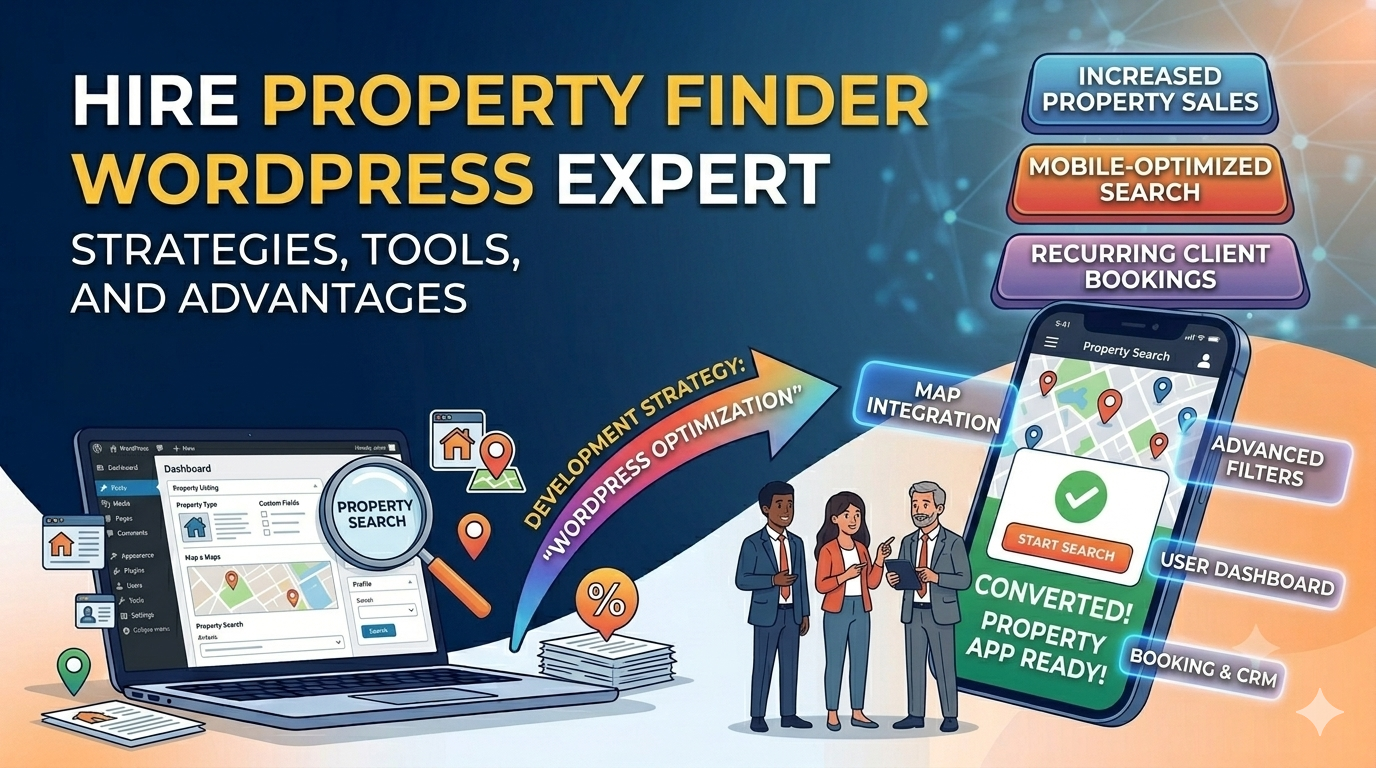
Property Finder WordPress Expert

Property Finder Expert: WordPress, API, XML Feed & CRM Integration Specialist

The real estate industry is becoming increasingly automated, and one platform that continues to dominate the Middle East market is Property Finder.

Whether you are a real estate agency, property developer, brokerage, property portal, CRM provider, or PropTech startup, maintaining accurate property listings across multiple platforms is critical for generating leads and closing deals.

Many agencies struggle with:

  • Manual property uploads
  • Duplicate listing management
  • Outdated property information
  • Missing images and media
  • Property Finder XML feed errors
  • API synchronization challenges
  • SEO limitations on imported listings
  • Multi-portal listing management

This is where a Property Finder Expert becomes valuable.

Instead of manually managing listings, modern real estate businesses are using automated synchronization systems that connect Property Finder with WordPress, Houzez, CRM systems, APIs, XML feeds, and custom real estate platforms.


What Does a Property Finder Expert Do?

A Property Finder integration specialist helps real estate businesses automate the flow of property data between multiple systems.

This includes:

  • Property Finder XML Feed Integration
  • Property Finder API Integration
  • Property Finder CRM Synchronization
  • WordPress Property Imports
  • Houzez Property Feed Automation
  • WP Residence Property Sync
  • Homey Property Import Solutions
  • Custom Real Estate Portal Development
  • Lead Synchronization
  • Property Data Aggregation
  • SEO Optimization for Imported Listings

The objective is simple:

Enter property data once and automatically distribute it everywhere.


Property Finder XML Feed Integration

The most common method of synchronizing listings with Property Finder is through XML feeds.

A Property Finder XML integration can automatically:

  • Create new listings
  • Update existing listings
  • Remove sold properties
  • Sync property images
  • Update prices
  • Manage property status changes
  • Synchronize agent information
  • Update property features and amenities

Instead of uploading spreadsheets manually, the XML feed becomes an automated bridge between your CRM and Property Finder.


Property Finder API Integration

Modern real estate systems increasingly use APIs instead of static XML files.

API integrations provide:

  • Real-time updates
  • Instant listing synchronization
  • Faster data processing
  • Two-way communication
  • Lead synchronization
  • Better scalability
  • Reduced manual work

Property Finder API workflows can synchronize:

  • Properties
  • Agents
  • Leads
  • Images
  • Floor plans
  • Videos
  • Property status updates
  • Availability information

Supported Real Estate CRMs

A Property Finder expert typically works with multiple real estate CRM systems.

  • Property Finder CRM
  • PropSpace CRM
  • MyCRM
  • Zoho CRM
  • Salesforce
  • HubSpot
  • Apimo
  • Reapit
  • Alto (Vebra)
  • Rex Software
  • Agentbox
  • VaultRE
  • MioGest
  • Pixxi
  • eGO Real Estate
  • Propertybase
  • Custom CRM Systems

Multiple CRM sources can be merged into a single centralized property database.


WordPress & Houzez Property Finder Integration

Many agencies use WordPress because of its flexibility and SEO advantages.

Popular integrations include:

  • Houzez Property Finder Integration
  • WP Residence Property Import
  • Homey Property Sync
  • MyHome Integration
  • RealHomes Property Automation
  • Custom WordPress Property Portals

Listings can be imported directly into WordPress and automatically synchronized in real time.

Changes made inside the CRM or Property Finder can instantly appear on the website.


Advanced Multi-Source Property Aggregation

Many agencies work with multiple listing sources simultaneously.

Modern synchronization platforms can aggregate:

  • Property Finder
  • Bayut
  • Dubizzle
  • Rightmove
  • Zoopla
  • Kyero
  • Idealista
  • ImmoScout24
  • MioGest
  • Apimo
  • Custom APIs
  • XML Feeds
  • JSON Feeds
  • Google Sheets
  • MLS Data Sources

The system normalizes all incoming data into a single structure before publishing it to websites and portals.


AI-Powered Property Listing Optimization

Raw property data is rarely optimized for SEO.

Modern systems use AI technologies such as:

  • ChatGPT
  • Claude
  • Gemini

to automatically improve:

  • Property titles
  • Descriptions
  • Meta titles
  • Meta descriptions
  • Image ALT tags
  • Image captions
  • Schema markup
  • Property feature summaries

Example:

Raw feed title:

Apartment for Sale New York

AI Optimized Title:

Luxury 2 Bedroom Apartment for Sale in Manhattan, New York Near Subway & Central Amenities

This significantly improves organic visibility and lead generation.


Why Real-Time Synchronization Matters

Property data changes constantly.

Without automation, agencies face:

  • Outdated listings
  • Incorrect pricing
  • Sold properties remaining online
  • Poor customer experience
  • Lost leads

Modern synchronization engines use:

  • API polling
  • Webhooks
  • Cron jobs
  • Queue systems
  • Background processing

to ensure data remains accurate across all connected platforms.


Enterprise Property Feed Processing

Large agencies often manage:

  • 10,000+ listings
  • Multiple offices
  • Multiple CRMs
  • Thousands of images
  • Multi-language content
  • Multiple portals

Professional synchronization systems use:

  • Laravel Queues
  • Redis Workers
  • Chunk Processing
  • API Rate Management
  • Media Optimization Pipelines
  • AI Content Processing

This prevents website slowdowns and failed imports.


Who Needs a Property Finder Expert?

  • Real Estate Agencies
  • Property Developers
  • Real Estate Brokers
  • Property Management Companies
  • Vacation Rental Companies
  • MLS Providers
  • PropTech Startups
  • WordPress Real Estate Websites
  • Houzez Theme Users
  • Property Portal Operators

Why Work With Me?

I specialize in:

  • Property Finder XML Feed Integration
  • Property Finder API Development
  • Houzez Property Imports
  • WordPress Real Estate Automation
  • CRM Synchronization Systems
  • Multi-Portal Property Distribution
  • AI-Powered Property SEO Optimization
  • Custom Real Estate Middleware Development
  • Large-Scale Property Feed Processing

With 1000+ successful integrations completed, I help agencies automate property management workflows and build scalable real estate platforms.


Frequently Asked Questions

Q: Can Property Finder listings be imported into WordPress?
Yes. Listings can be imported using XML feeds, APIs, webhooks, or custom synchronization engines.

Q: Can Houzez sync properties automatically?
Yes. Houzez supports automated property imports and real-time synchronization through custom integrations.

Q: Can multiple property sources be merged together?
Yes. APIs, XML feeds, CRMs, and MLS systems can be aggregated into a single property database.

Q: Can AI improve imported property listings?
Yes. AI can rewrite titles, descriptions, metadata, image alt tags, and SEO content automatically.

Q: Can property updates happen in real time?
Yes. Modern synchronization systems support real-time API updates, webhooks, and scheduled background processing.


Ready to Automate Property Finder Listings?

Need help with:

  • Property Finder XML Feed Integration
  • Property Finder API Development
  • Houzez Property Import Automation
  • WordPress Property Synchronization
  • Real Estate CRM Integration
  • Multi-Portal Property Distribution
  • AI Property SEO Optimization
  • Custom Real Estate Middleware

📩 Schedule a meeting on Upwork to discuss your project.

🎯 Schedule a meeting on Fiverr for custom Property Finder integration and automation services.

🌐 Visit APIFixer.com to learn more about real estate API integrations, CRM synchronization, and property automation solutions.

Keycafe API vs No-Code for Custom Property Software

Why Native Keycafe API Integration Beats No-Code Tools for Custom Property Management Software

As property management companies scale their operations, many initially rely on Zapier, Make.com, Pabbly, or other no-code automation tools to connect booking systems with Keycafe SmartBoxes.

At small scale, these tools may appear convenient.

However, once businesses begin managing:

  • Hundreds of properties
  • Thousands of guest check-ins
  • Cleaning staff coordination
  • Multi-location access systems
  • Recurring key handoffs
  • Real-time booking synchronization
  • Enterprise property operations

they quickly discover that no-code automation platforms create serious operational limitations.

If you are searching for:

  • Custom PMS Keycafe API integration
  • Keycafe API vs Zapier for enterprise
  • Property management SmartBox automation
  • Enterprise Keycafe middleware development
  • Custom booking access synchronization
  • High-volume Keycafe API systems
  • Scalable property management automation
  • Custom hospitality integration hub

then this guide explains why native API integration architecture is dramatically more reliable, scalable, and cost-effective than relying on no-code tools.


Why No-Code Automation Breaks at Scale

Platforms like Zapier are designed for lightweight business automation.

They work reasonably well for:

  • Simple notifications
  • Small workflows
  • Low-volume integrations
  • Basic business automation
  • Simple form submissions
  • Entry-level synchronization

However, property management systems involve:

  • Real-time booking changes
  • Time-sensitive guest access
  • Large numbers of API requests
  • Complex role-based permissions
  • Smart lock scheduling
  • Guest verification workflows
  • Error recovery requirements
  • Mission-critical synchronization

This is where no-code systems begin failing.


The Real Problem with Zapier for Keycafe Automation

Many agencies initially build workflows like:

  1. Booking created in PMS
  2. Zapier receives webhook
  3. Zapier calls Keycafe API
  4. Guest receives access code

At low volume, this seems acceptable.

But once businesses scale to:

  • Hundreds of daily bookings
  • Multiple SmartBoxes
  • Cleaning team coordination
  • Dynamic booking updates
  • Last-minute cancellations
  • Guest extensions
  • Multi-property operations

Zapier workflows become unreliable and expensive.


Common Failures in No-Code Keycafe Workflows

Webhook Delays

No-code platforms often queue webhook events during traffic spikes.

This can cause:

  • Delayed guest access
  • Late SmartBox updates
  • Expired pickup windows
  • Guest check-in failures
  • Operational chaos

Silent Workflow Failures

One of the biggest risks with Zapier-style systems is silent failure.

Examples include:

  • Webhook timeouts
  • API rate limits
  • Invalid payloads
  • Broken authentication tokens
  • Temporary Keycafe outages
  • Corrupted booking data

In many cases:

  • The workflow partially fails
  • The guest never receives access
  • The cleaner cannot retrieve keys
  • No retry logic exists
  • No fallback process runs
  • Operations staff discover the problem too late

No Proper Error Recovery

Enterprise property systems require:

  • Retry queues
  • Fallback logic
  • Dead-letter queues
  • Webhook replay systems
  • Failure notifications
  • Audit logging
  • Monitoring dashboards
  • Transactional consistency

No-code tools are not designed for this level of operational resilience.


API Rate Limiting Problems

At enterprise scale, businesses often trigger:

  • Thousands of daily API calls
  • Bulk booking updates
  • Recurring synchronization events
  • High-frequency access scheduling
  • Real-time property changes

Zapier-style systems commonly hit:

  • API rate limits
  • Task throttling
  • Delayed execution queues
  • Workflow bottlenecks
  • Automation slowdowns

Why No-Code Automation Becomes Extremely Expensive

Most no-code platforms charge based on:

  • Task executions
  • Webhook events
  • Workflow runs
  • Premium integrations
  • API operations

For property management businesses processing:

  • Guest bookings
  • Check-in updates
  • Cleaner schedules
  • Maintenance requests
  • Access renewals
  • Booking modifications

monthly costs can rapidly become extremely high.

Large PMS operators often discover they are paying:

  • Thousands per month in automation fees
  • Additional premium integration costs
  • Per-task execution charges
  • Scaling penalties

while still lacking enterprise-grade reliability.


Why Native Keycafe API Integration Is Better

A native API integration connects your PMS directly to Keycafe without relying on third-party workflow tools.

This architecture provides:

  • Direct API communication
  • Real-time synchronization
  • Custom retry systems
  • Queue-based processing
  • Advanced monitoring
  • Centralized logging
  • Scalable infrastructure
  • Enterprise-grade reliability

What a Professional Integration Architecture Looks Like

Enterprise-grade property automation systems commonly use:

  • Laravel middleware platforms
  • Redis queue workers
  • Webhook ingestion services
  • Background processing systems
  • Database synchronization layers
  • API gateway architecture
  • Cloud-based event pipelines
  • Distributed processing queues

This creates a resilient integration hub between:

  • Property Management Systems (PMS)
  • Keycafe SmartBoxes
  • Booking engines
  • Cleaning management systems
  • Guest messaging systems
  • Identity verification platforms
  • Access control systems

Example Enterprise Keycafe Workflow

  1. A guest books a property
  2. The PMS creates a reservation event
  3. The middleware validates booking data
  4. The system creates a Keycafe access window
  5. The guest receives pickup instructions
  6. Redis queues monitor synchronization
  7. Automatic retries handle failures
  8. Logs track every API transaction
  9. Staff dashboards monitor operational status

Why Queue Systems Matter for Property Automation

Enterprise systems cannot depend on instant webhook execution alone.

Professional infrastructure uses:

  • Queue workers
  • Background jobs
  • Retry pipelines
  • Distributed processing
  • Priority scheduling
  • Webhook replay systems

This prevents:

  • Lost access codes
  • Guest lockouts
  • Synchronization failures
  • Operational downtime
  • Missed check-ins
  • Broken booking updates

Custom Middleware vs Zapier

Feature Zapier / No-Code Custom Middleware
Scalability Limited Enterprise-grade
Error Recovery Basic Advanced retry systems
Queue Processing Minimal Full queue architecture
Monitoring Limited Real-time dashboards
API Control Restricted Fully customizable
Operational Cost High at scale Predictable infrastructure cost
Security Third-party dependency Direct infrastructure control
Performance Variable Optimized

Why Enterprise Property Managers Need Centralized Integration Hubs

Modern property businesses often operate:

  • Vacation rentals
  • Corporate housing
  • Co-living spaces
  • Serviced apartments
  • Remote check-in systems
  • Cleaning operations
  • Maintenance scheduling
  • Multi-city property networks

A centralized integration hub enables:

  • Unified access management
  • Cross-platform synchronization
  • Scalable automation workflows
  • Operational monitoring
  • Real-time analytics
  • Audit logging
  • Role-based permissions
  • Advanced API orchestration

Sample Native Keycafe Middleware Workflow (PHP)

class CreateKeycafeAccessJob implements ShouldQueue
{
    use Dispatchable, Queueable;

    public function handle()
    {
        $booking = Booking::find($this->bookingId);

        if (!$booking) {
            return;
        }

        Http::retry(5, 2000)
            ->withHeaders([
                'Authorization' => 'Bearer API_KEY'
            ])
            ->post(
                'https://api.keycafe.com/access',
                [
                    'guest_name' => $booking->guest_name,
                    'phone'      => $booking->phone,
                    'start_time' => $booking->checkin_at,
                    'end_time'   => $booking->checkout_at
                ]
            );
    }
}

Benefits of Custom PMS Keycafe API Integration

  • Real-time synchronization
  • Enterprise-grade reliability
  • Advanced retry systems
  • Scalable automation architecture
  • Centralized operational monitoring
  • Reduced long-term costs
  • Better security control
  • Custom workflow flexibility
  • Improved guest experience
  • Reduced operational failures

Who Needs Native Keycafe API Infrastructure?

  • Large property management companies
  • Vacation rental operators
  • Hospitality SaaS platforms
  • Co-living businesses
  • Corporate housing operators
  • Smart access startups
  • Enterprise PMS providers
  • Remote check-in platforms
  • Multi-location rental businesses

Advanced Features Developers Can Build

  • AI-powered operational monitoring
  • Guest risk scoring systems
  • Automated failure recovery
  • Real-time analytics dashboards
  • Distributed event processing
  • Multi-region infrastructure
  • Cloud audit reporting
  • Role-based access management
  • Webhook replay systems
  • Advanced queue orchestration
  • Booking conflict detection
  • High-volume API gateways

Why Work With Me?

I specialize in:

  • Custom PMS Keycafe API integration
  • Enterprise property automation systems
  • Laravel middleware architecture
  • High-volume API infrastructure
  • Queue-based synchronization systems
  • SmartBox workflow automation
  • Resilient booking synchronization
  • Enterprise webhook systems
  • Real-time access automation

With extensive experience in:

  • REST API architecture
  • Distributed queue systems
  • Redis workers
  • Cloud infrastructure
  • Webhook processing pipelines
  • Property management software
  • Scalable automation platforms
  • High-availability middleware systems

I help property businesses replace fragile no-code workflows with scalable enterprise-grade integration infrastructure.


Frequently Asked Questions

Q: Is Zapier reliable for enterprise Keycafe automation?
Zapier can work for small workflows, but enterprise-scale property systems typically require custom infrastructure for reliability and scalability.

Q: Why do no-code workflows fail at scale?
High API volume, webhook delays, missing retry systems, and operational complexity often cause failures in large automation environments.

Q: Can custom middleware reduce automation costs?
Yes. Native integrations usually become far more cost-effective than per-task no-code pricing at scale.

Q: What technologies are commonly used for enterprise integrations?
Laravel, Redis, queue workers, cloud middleware systems, webhook pipelines, and distributed processing infrastructure are commonly used.

Q: Can multiple property systems connect into one integration hub?
Yes. A centralized middleware architecture can synchronize PMS platforms, SmartBoxes, booking systems, cleaning workflows, and guest messaging systems.


Ready to Replace Fragile No-Code Automation?

If you need help with:

  • Custom PMS Keycafe API integration
  • Enterprise property automation
  • High-volume SmartBox synchronization
  • Laravel middleware development
  • Queue-based workflow systems
  • Webhook infrastructure architecture
  • Scalable booking synchronization
  • Enterprise access automation

📩 Contact me on Upwork to discuss your project.

🎯 Order on Fiverr for custom Keycafe API integration and enterprise automation development services.

Hz Feed Syncer – Real-Time Property Data Sync for WordPress (Houzez, Homey, WP Residence & More)

Hz Feed Syncer – Real-Time Property Data Sync for WordPress (Houzez, Homey, WP Residence & More)

In 2026, real estate platforms are no longer built manually—they are powered by data automation. Whether your listings come from a CRM, MLS feed, XML endpoint, or custom API, managing them manually inside WordPress is inefficient and error-prone.

Hz Feed Syncer is a powerful middleware solution designed to import, normalize, and sync property data from multiple sources directly into WordPress themes like Houzez, Homey, WP Residence, and more—in real time, without slowing down your website.


The Problem with Traditional Property Imports

Most real estate websites struggle with outdated or inefficient data workflows:

  • Manual CSV/XML imports that break layouts
  • Inconsistent property data across sources
  • Slow cron jobs that delay updates
  • Missing SEO metadata (image alt, captions, schema)
  • Performance issues when handling large datasets

These limitations affect not just operations—but also search rankings, user experience, and lead generation.


What Is Hz Feed Syncer?

Hz Feed Syncer is a custom-built data synchronization engine that acts as a bridge between your external data sources and your WordPress real estate website.

It supports:

  • REST APIs (JSON-based endpoints)
  • XML feeds (IDX, MLS, custom feeds)
  • CSV and database exports
  • CRM systems and SaaS platforms
  • Custom proprietary data sources

Instead of relying on one source, it allows multi-source aggregation into a single unified system.


Multi-Source Data Aggregation (Core Strength)

Hz Feed Syncer can connect to multiple data providers simultaneously:

  • CRM A → Residential listings
  • API B → Rental properties
  • XML Feed C → Commercial properties

All data is merged, normalized, and published into WordPress as a single clean dataset.

This eliminates duplication, conflicts, and inconsistencies.


Real-Time Sync Without Slowing Down Your Website

Handling thousands of properties requires performance-focused architecture. Hz Feed Syncer uses:

  • Chunk-Based Processing: Data is processed in small batches
  • Background Jobs (Queues): No heavy operations during page load
  • Smart Diff Updates: Only changed data is updated

This ensures:

  • No server overload
  • No downtime during sync
  • Consistent website performance

Data Normalization Engine

Different sources use different formats. Hz Feed Syncer standardizes everything:

  • Price formats (USD, EUR, etc.)
  • Area units (sqft, sqm)
  • Property types and categories
  • Custom fields and taxonomies

This creates a clean, structured dataset ready for frontend display and SEO.


SEO Optimization Built Into the Sync Process

Unlike basic import tools, Hz Feed Syncer enhances your listings for search engines:

  • Auto-generate image ALT tags
  • Set image captions and metadata
  • Optimize titles and descriptions
  • Structured data readiness (schema support)
  • Clean URL and slug generation

This ensures your listings are not just visible—but rankable.


Real-Time Updates (Instant Reflection)

Any change in the source data reflects instantly on your website:

  • Price updates
  • Availability changes
  • Image modifications
  • Description edits

No delays, no manual refresh—your website is always 100% in sync.


Supported WordPress Themes

Hz Feed Syncer is built for flexibility and supports:

  • Houzez
  • Homey
  • WP Residence
  • MyHome
  • RealHomes
  • Custom-built themes

It maps data directly into each theme’s structure, including custom fields and taxonomies.


How Hz Feed Syncer Works (Technical Workflow)

  1. Source Connection: Connect APIs, XML feeds, or CRM endpoints
  2. Data Fetching: Pull data in scheduled or real-time intervals
  3. Normalization: Convert data into a unified schema
  4. SEO Enrichment: Add metadata, alt tags, and optimized content
  5. Chunk Processing: Process data in batches for performance
  6. Publishing: Insert/update listings in WordPress

Sample Code: Fetch & Process API Data (PHP)


function fetch_and_sync_properties() {

    $response = wp_remote_get('https://api.example.com/properties');
    $data = json_decode(wp_remote_retrieve_body($response), true);

    foreach ($data as $property) {

        $normalized = normalize_property($property);

        wp_insert_post([
            'post_title'   => $normalized['title'],
            'post_content' => $normalized['description'],
            'post_type'    => 'property',
            'meta_input'   => $normalized['meta']
        ]);
    }
}

Core Features of Hz Feed Syncer

  • Multi-Source Data Integration: APIs, XML, CSV, CRM systems
  • Real-Time Sync Engine: Instant updates across listings
  • SEO Data Enrichment: Optimized metadata and images
  • Performance Optimization: Chunk processing and queues
  • Theme Compatibility: Works with all major real estate themes

Why Custom Feed Syncer Beats Standard Plugins

Generic plugins are limited to basic imports. Hz Feed Syncer provides:

  • Full control over data logic
  • Advanced mapping and transformations
  • Scalable architecture for large datasets
  • Support for any API or feed format

Why Work With Me?

I specialize in real estate data integration and WordPress automation systems. With 10+ years of experience and 1000+ integrations delivered, I build scalable sync engines that power high-performance property platforms.

I don’t just import data—I build intelligent systems that grow your business.


Frequently Asked Questions

Q: Can Hz Feed Syncer handle multiple APIs at once?
Yes. It is designed to fetch and merge data from multiple sources simultaneously.

Q: Will it slow down my WordPress site?
No. It uses background processing and chunk-based updates to maintain performance.

Q: Does it support Houzez and other themes?
Yes. It supports Houzez, Homey, WP Residence, and custom themes.

Q: Is SEO handled automatically?
Yes. Image metadata, titles, and descriptions are optimized during sync.


Ready to Automate Your Property Data?

If you want a real-time, scalable solution to manage property listings across multiple sources, Hz Feed Syncer is the answer.

📩 Contact me on Upwork to build your custom property sync system.