UTTeam WooCommerce Plugin

utteam-woocommerce-plugin-b2b-b2c-api

UTTeam WooCommerce Plugin & Full Supplier Automation System (Product Sync + Dropshipping Order API Integration)

UTTeam WooCommerce integration, WooCommerce supplier API plugin, product sync WooCommerce UTTeam, dropshipping automation WooCommerce, inventory synchronization WordPress middleware, variable product supplier sync

Modern WooCommerce stores are no longer just β€œproduct import websites.”

They are fully automated commerce systems that require:

  • real-time supplier synchronization
  • variable product mapping
  • stock accuracy (in-stock / out-of-stock logic)
  • insert, update, delete product lifecycle management
  • order forwarding back to supplier APIs

I recently built a complete UTTeam WooCommerce integration system using a custom middleware architecture, designed specifically for scalable dropshipping operations.


Reference Ecosystem (WordPress Supplier Sync Landscape)

While exploring existing solutions like:

πŸ”— Products Sync for WooCommerce (multi-supplier import framework)

I identified a key limitation in most plugins:

  • they only handle product import
  • they do not properly handle lifecycle sync (update/delete logic)
  • they lack advanced variable product mapping for complex suppliers like UTTeam

So I implemented a custom middleware-driven architecture instead of relying on a single plugin layer.


Project Example: UTTeam WooCommerce Integration System

This system was designed to solve full-cycle dropshipping automation for WooCommerce stores using UTTeam supplier APIs.

Core objective:

Build a system that automatically synchronizes products from UTTeam into WooCommerce and sends orders back to the supplier without manual intervention.


System Architecture Overview

The solution is built using three layers:

  • UTTeam Supplier API Layer
  • Custom Middleware Sync Engine
  • WooCommerce Product & Order System

1. Product Sync from UTTeam API

The system fetches full product datasets from UTTeam, including:

  • simple & variable products
  • SKU-based inventory data
  • attributes and variations
  • pricing structures
  • product media

All incoming data is normalized before entering WooCommerce.


2. Middleware Normalization & Transformation Layer

Raw supplier data is never pushed directly into WooCommerce.

Instead, a transformation layer handles:

  • attribute mapping
  • variation grouping logic
  • SKU standardization
  • stock normalization rules

This ensures compatibility with WooCommerce product architecture.


3. Hash-Based Change Detection System

To avoid redundant processing, every product is stored using a hashed representation inside a custom database table.

This allows detection of:

  • new products β†’ insert
  • modified products β†’ update
  • missing products β†’ delete
  • unchanged products β†’ skipped (performance optimization)

This is critical for large supplier catalogs where full re-imports are not scalable.


4. Insert / Update / Delete Sync Engine

The WooCommerce system is updated intelligently:

  • new UTTeam products are automatically created
  • existing products are updated only when changes are detected
  • removed supplier products are disabled or deleted from WooCommerce

This ensures the storefront always reflects real supplier availability.


5. Real-Time Inventory Synchronization

The system continuously syncs stock levels from UTTeam API.

This includes:

  • in-stock updates
  • out-of-stock handling
  • variation-level stock updates

This prevents overselling and improves customer trust in live inventory accuracy.


6. Variable Product Handling (Advanced Mapping Engine)

UTTeam products often include complex variation structures.

The system handles:

  • parent-child product relationships
  • variation attribute consistency
  • SKU-level stock mapping
  • WooCommerce variation synchronization

This is one of the most critical parts of enterprise-level WooCommerce integrations.


7. Order Forwarding Back to UTTeam (Dropshipping Automation)

Once a customer places an order on WooCommerce, the system automatically:

  • captures order data
  • maps WooCommerce SKUs to UTTeam product IDs
  • builds structured API payload
  • posts order to UTTeam supplier system

This creates a fully automated dropshipping workflow with no manual order handling.


Why Middleware Is Better Than Direct Plugins

Most WooCommerce supplier plugins fail at scale because they:

  • re-import full catalogs repeatedly
  • lack intelligent change detection
  • break under large datasets
  • don’t support order reverse-sync (supplier ordering)

A middleware system solves this by acting as a control layer between WooCommerce and supplier APIs.

This results in:

  • faster sync cycles
  • lower server load
  • scalable architecture
  • production-grade stability

Comparison: Basic Plugin vs Middleware System

Feature Basic WooCommerce Plugin Custom Middleware System
Product sync Full re-import Delta-based (hash detection)
Variable products Limited support Full mapping engine
Stock updates Cron-based delays Near real-time sync
Order forwarding Often missing Fully automated API push
Scalability Low High (enterprise-ready)

Who This System Is Built For

This architecture is ideal for:

  • WooCommerce dropshipping businesses
  • UTTeam supplier integrations
  • multi-supplier inventory systems
  • wholesale eCommerce platforms
  • high-volume product catalogs

Related Integration Work

I also developed similar systems for:

  • Miogest CRM WooCommerce synchronization
  • Gastronoble dropshipping automation
  • multi-API inventory synchronization systems

πŸ”— Miogest CRM case study:
https://apifixer.com/miogest-crm-wordpress-plugin/


Why Work With Me?

I specialize in building advanced WooCommerce automation systems including:

  • supplier API integrations
  • custom WooCommerce plugin development
  • inventory synchronization middleware
  • dropshipping automation workflows
  • enterprise-level product data pipelines

My focus is always on building scalable systems that go beyond basic plugins and solve real operational problems.


Frequently Asked Questions (FAQ)

Q: Can UTTeam be integrated directly into WooCommerce?
Yes, but direct integration is not scalable. Middleware improves reliability and performance significantly.

Q: Does the system support variable products?
Yes. It includes full variation mapping and SKU-level stock synchronization.

Q: How does stock synchronization work?
Stock is continuously pulled from UTTeam API and reflected in WooCommerce in near real time.

Q: Can orders be sent back to UTTeam automatically?
Yes. Orders are forwarded to UTTeam API for automated dropshipping fulfillment.

Q: Is this scalable for large catalogs?
Yes. Hash-based delta syncing ensures high performance even with thousands of products.


Need a Custom WooCommerce Supplier Integration?

If you are looking for:

  • UTTeam WooCommerce integration
  • supplier API automation system
  • real-time inventory sync plugin
  • dropshipping workflow automation
  • custom middleware architecture

πŸ“© Contact me on Upwork

🎯 Hire me on Fiverr


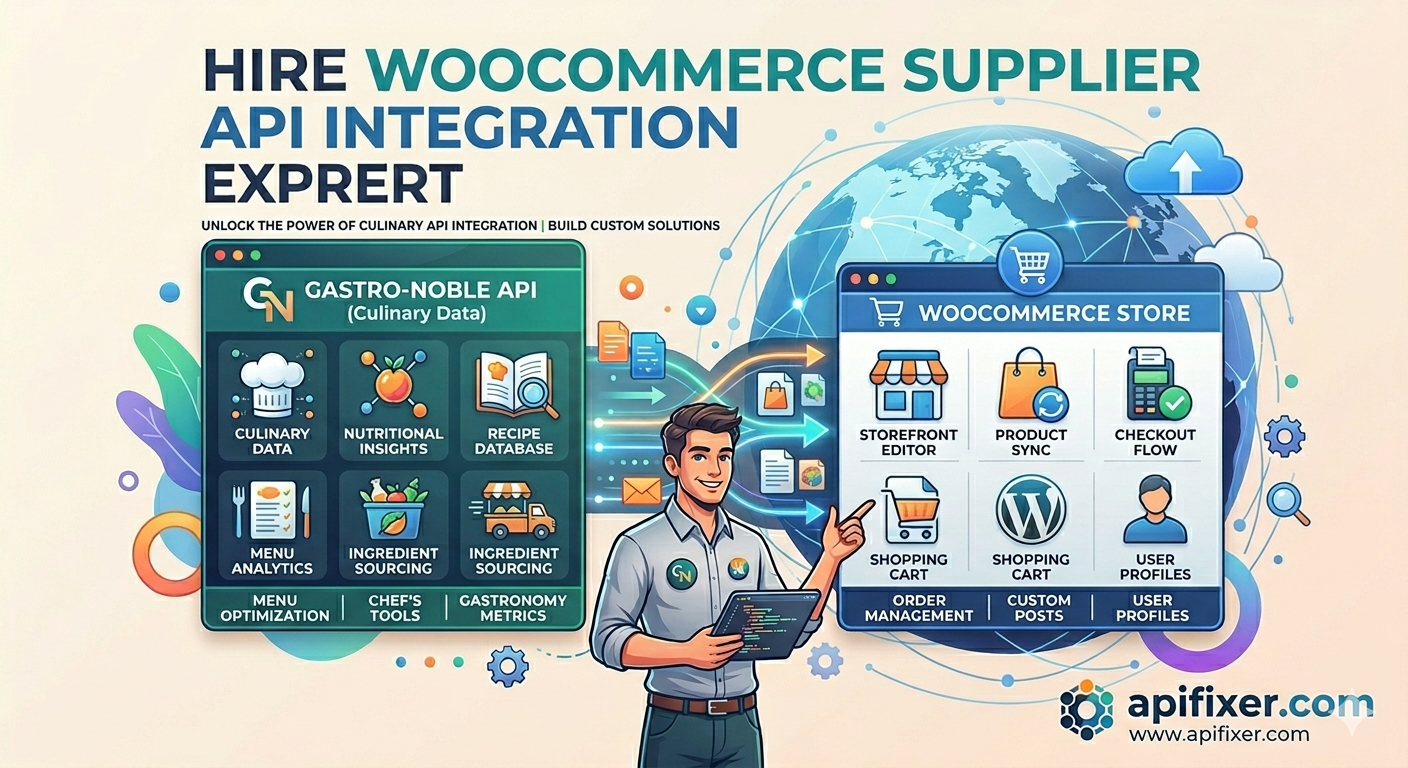
hire WooCommerce supplier API integration Expert

hire WooCommerce supplier API integration Expert

End-to-End WooCommerce Supplier Sync & Dropshipping Automation for UTTeam & Multi-Supplier APIs (WordPress Middleware Case Study)

Target Keywords: WooCommerce supplier API integration, UTTeam dropshipping WooCommerce plugin, product sync WordPress WooCommerce, inventory automation WooCommerce, order API WooCommerce dropshipping system

Modern WooCommerce stores that rely on supplier APIs are no longer simple β€œimport products and sell” systems.

They are now fully automated data pipelines that must handle:

  • real-time product synchronization
  • variable product handling
  • stock updates (in-stock / out-of-stock logic)
  • product insert, update, and delete operations
  • order forwarding back to supplier APIs

I recently built and deployed a full middleware-based WooCommerce synchronization system for a real production environment using:

  • :contentReference[oaicite:0]{index=0}
  • UTTeam supplier API
  • multi-source product sync architecture

This type of system is ideal for businesses that need a stable WooCommerce supplier API integration + dropshipping automation pipeline.


Real Project Example: Textilbase WooCommerce Sync System

I implemented this system for:

🌐 https://textilbase.cz

The goal was to build a fully automated product synchronization system between WooCommerce and UTTeam supplier APIs.


The Core Problem

Most WooCommerce dropshipping setups fail at scale because they rely on basic import plugins that:

  • re-import entire catalogs repeatedly
  • don’t properly handle variable products
  • fail to track deleted products
  • lack intelligent stock comparison
  • don’t support order automation back to supplier APIs

In this case, the requirement was more advanced:

  • handle UTTeam variable products
  • sync large product catalogs efficiently
  • keep inventory accurate in real time
  • automatically push orders back to supplier

The Solution: Middleware-Based WooCommerce Sync Architecture

Instead of connecting WooCommerce directly to the supplier API, I built a middleware synchronization layer.

This middleware acts as a control system between:

  • UTTeam Supplier API
  • WordPress WooCommerce store
  • custom database sync layer

How the System Works

1. Supplier Data Extraction (UTTeam API)

The system pulls complete product datasets from UTTeam, including:

  • simple and variable products
  • SKU mappings
  • stock availability
  • pricing and attributes
  • images and variants

2. Data Normalization Layer

Raw supplier data is inconsistent, so it is normalized into a structured WooCommerce format.

This includes:

  • attribute mapping
  • variation grouping
  • SKU standardization
  • stock logic normalization

3. Hash-Based Change Detection System

To avoid unnecessary processing, every product is stored in a hashed format inside a custom database table.

This allows the system to detect:

  • new products β†’ insert
  • changed products β†’ update
  • missing products β†’ delete
  • unchanged products β†’ skip

This is critical for performance when handling large catalogs.


4. Insert / Update / Delete Sync Engine

The WooCommerce database is updated intelligently:

  • new products are created automatically
  • existing products are updated only if changes are detected
  • removed supplier products are deleted or disabled in WooCommerce

This ensures the storefront always matches supplier reality.


5. Inventory Synchronization (Real-Time Stock Logic)

Stock levels are continuously synced from UTTeam API.

The system automatically updates:

  • in-stock products
  • out-of-stock products
  • variation-level stock availability

This prevents overselling and improves customer trust.


6. Variable Product Handling (Advanced Mapping)

One of the most complex parts was handling UTTeam variable products.

The middleware ensures:

  • correct parent-child product relationships
  • attribute consistency across variations
  • SKU-level stock mapping

7. Order Forwarding to UTTeam (Dropshipping Automation)

When a customer places an order on WooCommerce:

  • order data is captured
  • products are mapped to supplier SKUs
  • order payload is generated
  • order is posted back to UTTeam API

This enables fully automated dropshipping fulfillment.

πŸ”— Example integration reference (WooCommerce API approach):

Products Sync for WooCommerce Plugin (similar architecture reference) :contentReference[oaicite:1]{index=1}


Why Middleware Architecture Matters

Most plugins try to solve this with direct API syncs.

But at scale, that approach breaks due to:

  • API rate limits
  • slow cron-based updates
  • lack of change tracking
  • high server load

A middleware layer solves this by acting as a data intelligence engine:

  • reduces API calls
  • optimizes update cycles
  • filters unnecessary operations
  • ensures consistency across systems

Comparison: Basic Plugin Sync vs Middleware System

Feature Basic WooCommerce Plugin Middleware Sync System (This Solution)
Product sync method Full re-import Delta (hash-based updates)
Variable products Limited / unstable Fully supported mapping engine
Stock updates Delayed / cron-based Near real-time sync
Order forwarding Often missing Fully automated API push
Scalability Low High (optimized middleware)

Who This Solution Is Built For

This system is ideal for:

  • WooCommerce dropshipping businesses
  • supplier API integrations (UTTeam, CSV, XML, REST)
  • multi-vendor inventory systems
  • wholesale WooCommerce stores
  • high-volume product catalogs

Related Work

I also built similar systems for:

  • Miogest CRM WordPress synchronization
  • Gastronoble WooCommerce dropshipping automation
  • real-time inventory sync architectures

πŸ”— Miogest CRM integration case study:
https://apifixer.com/miogest-crm-wordpress-plugin/


Why Work With Me?

I specialize in building advanced:

  • WooCommerce supplier integrations
  • dropshipping automation systems
  • API middleware architectures
  • real-time inventory sync solutions
  • custom WordPress plugin development

My focus is not just importing products β€” but building scalable, production-grade automation systems that eliminate manual work entirely.


Frequently Asked Questions (FAQ)

Q: Can WooCommerce handle UTTeam supplier APIs directly?
Yes, but direct integration does not scale well. Middleware improves reliability and performance.

Q: How are variable products handled?
Through a structured mapping system that maintains parent-child relationships and SKU-level inventory tracking.

Q: Does the system support real-time stock updates?
Yes, stock is continuously synchronized and reflected in WooCommerce.

Q: Can orders be automatically sent to the supplier?
Yes, orders are forwarded to UTTeam API automatically after checkout.

Q: Is this scalable for large catalogs?
Yes, hash-based delta syncing ensures performance even with thousands of products.


Need a Custom WooCommerce Supplier Integration System?

If you are looking for:

  • UTTeam WooCommerce integration
  • supplier API dropshipping system
  • real-time inventory synchronization
  • custom WooCommerce middleware development
  • scalable product sync architecture

πŸ“© Contact me on Upwork

🎯 Hire me on Fiverr


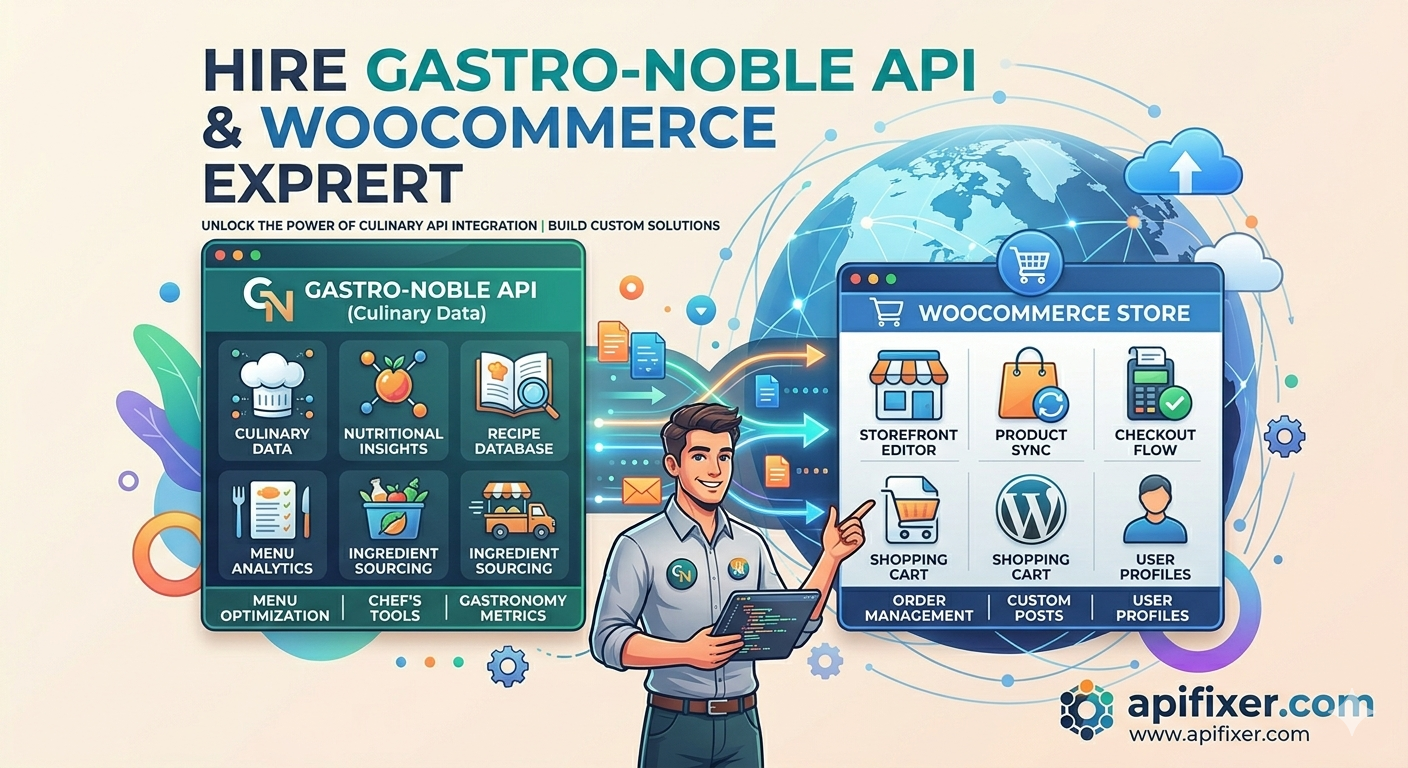
Hire Gastronoble API WooCommerce Expert

Hire Gastronoble API WooCommerce Expert

Gastronoble WooCommerce Dropshipping & Inventory Sync for WordPress (WooCommerce Plugin Integration Case Study)

Gastronoble WooCommerce integration, dropshipping API WooCommerce, inventory sync WooCommerce plugin, real-time stock update WooCommerce, supplier API order automation

Modern eCommerce stores in the hospitality and restaurant supply industry rely heavily on real-time inventory accuracy and automated order processing.

I recently implemented a full WooCommerce + Gastronoble integration system for the websites:

The goal was to create a fully automated dropshipping and inventory synchronization engine between WooCommerce and the Gastronoble supplier API:

πŸ”— Gastronoble API Swagger Documentation


The Business Problem

Before automation, the client faced typical supplier-sync challenges:

  • inventory mismatches between supplier and website
  • out-of-stock products still visible online
  • manual product updates consuming time
  • delayed stock visibility for customers
  • order processing done manually

In dropshipping environments, even a small delay in stock updates can cause:

  • overselling products
  • refunds and cancellations
  • customer dissatisfaction
  • logistics confusion

The system needed to be fully automated, fast, and reliable.


The Solution: Custom WooCommerce Gastronoble Sync Plugin

I developed a custom WordPress plugin that acts as a middleware layer between:

  • WooCommerce store (horeca-winkel.shop / horeca-winkel.be)
  • Gastronoble supplier API

The plugin handles the entire product lifecycle:

  • product import
  • inventory updates
  • stock status synchronization
  • product deletion handling
  • order forwarding (dropshipping automation)

How the Inventory Sync System Works

1. Product Import from Gastronoble API

The system pulls full product data from the Gastronoble API including:

  • product titles and descriptions
  • pricing and variants
  • stock availability
  • SKU mapping
  • category structure
  • product images

Each product is normalized before insertion into WooCommerce.


2. Smart Database Storage with Hashing

Instead of repeatedly overwriting all products, I implemented a hash-based comparison system.

Each product is stored in a custom WooCommerce database table in hashed format, allowing the system to detect:

  • new products
  • updated products
  • deleted products
  • unchanged products (skipped for performance)

This ensures:

  • minimal database load
  • faster sync cycles
  • reduced server overhead
  • efficient large catalog handling

3. Real-Time Stock Synchronization

The plugin continuously synchronizes inventory status from Gastronoble.

Whenever stock changes occur at the supplier level:

  • WooCommerce stock is updated automatically
  • products are marked in-stock / out-of-stock
  • visibility is adjusted in real time

This ensures customers only see accurate product availability at all times.


4. Automatic Insert, Update & Delete Logic

Operation System Behavior
Insert New supplier products are added automatically to WooCommerce
Update Existing products are updated only if data has changed (hash comparison)
Delete Removed supplier products are automatically removed or hidden from store

5. Order Forwarding to Gastronoble (Dropshipping Automation)

Once a customer places an order on WooCommerce, the system automatically:

  • captures order details
  • maps WooCommerce SKUs to Gastronoble product IDs
  • formats order payload
  • posts order to Gastronoble API

This enables fully automated dropshipping fulfillment through:

πŸ”— Gastronoble Order API (Swagger)

No manual order processing is required.


Stock Status Intelligence (In Stock / Out of Stock Automation)

The system continuously evaluates stock states and automatically updates WooCommerce product visibility:

  • instock β†’ visible + purchasable
  • outofstock β†’ hidden or marked unavailable
  • low stock β†’ optional threshold alerts

This prevents overselling and improves customer trust.


Image Sync & Media Optimization

All product images from Gastronoble are automatically:

  • downloaded into WordPress media library
  • assigned as featured images
  • mapped into product galleries
  • optimized with proper filenames

This improves both:

  • SEO performance
  • page load speed
  • product presentation quality

Performance Design Considerations

The system is optimized for large-scale catalog synchronization:

  • batch processing for API calls
  • delta-based updates (no full re-imports)
  • hash comparison instead of full data overwrite
  • scheduled sync cycles (safe 5-minute interval)

This ensures stable performance even with thousands of products.


Why Custom WooCommerce Integration Matters

Generic plugins often fail in complex supplier environments because they:

  • lack real-time update handling
  • re-import entire catalogs repeatedly
  • do not support order forwarding APIs
  • cannot handle custom supplier logic

A custom integration allows full control over:

  • inventory logic
  • data mapping
  • performance optimization
  • dropshipping workflows

Related Work & Integration Reference

I have also worked on similar CRM and API synchronization systems. You can view another related implementation here:

πŸ”— Miogest CRM WordPress Integration Case Study


Who This Solution Is For

This type of system is ideal for:

  • hospitality supply stores
  • B2B wholesale WooCommerce stores
  • dropshipping businesses
  • supplier-based eCommerce platforms
  • multi-vendor inventory systems

Why Work With Me?

I specialize in building advanced WooCommerce automation systems including:

  • supplier API integrations
  • real-time inventory synchronization
  • dropshipping automation workflows
  • custom WooCommerce plugin development
  • ERP and CRM integrations
  • large-scale product data pipelines

My focus is building systems that are not just functional β€” but scalable, optimized, and production-ready.


Frequently Asked Questions (FAQ)

Q: Does the system support real-time inventory updates?
Yes. Stock levels are continuously synchronized from Gastronoble API.

Q: Can orders be automatically sent to the supplier?
Yes. WooCommerce orders are automatically forwarded to Gastronoble API for fulfillment.

Q: Does it prevent overselling?
Yes. Stock status is updated in real time, ensuring accurate availability.

Q: Can this handle large product catalogs?
Yes. The system uses hashed delta-based updates to optimize performance.

Q: Is this a plugin or custom system?
It is a custom-built WordPress plugin tailored specifically for supplier integration workflows.


Need a Custom WooCommerce Supplier Integration?

If you are looking for:

  • Gastronoble WooCommerce integration
  • supplier API synchronization
  • dropshipping automation system
  • real-time inventory sync plugin
  • custom WooCommerce development

πŸ“© Contact me on Upwork

🎯 Hire me on Fiverr


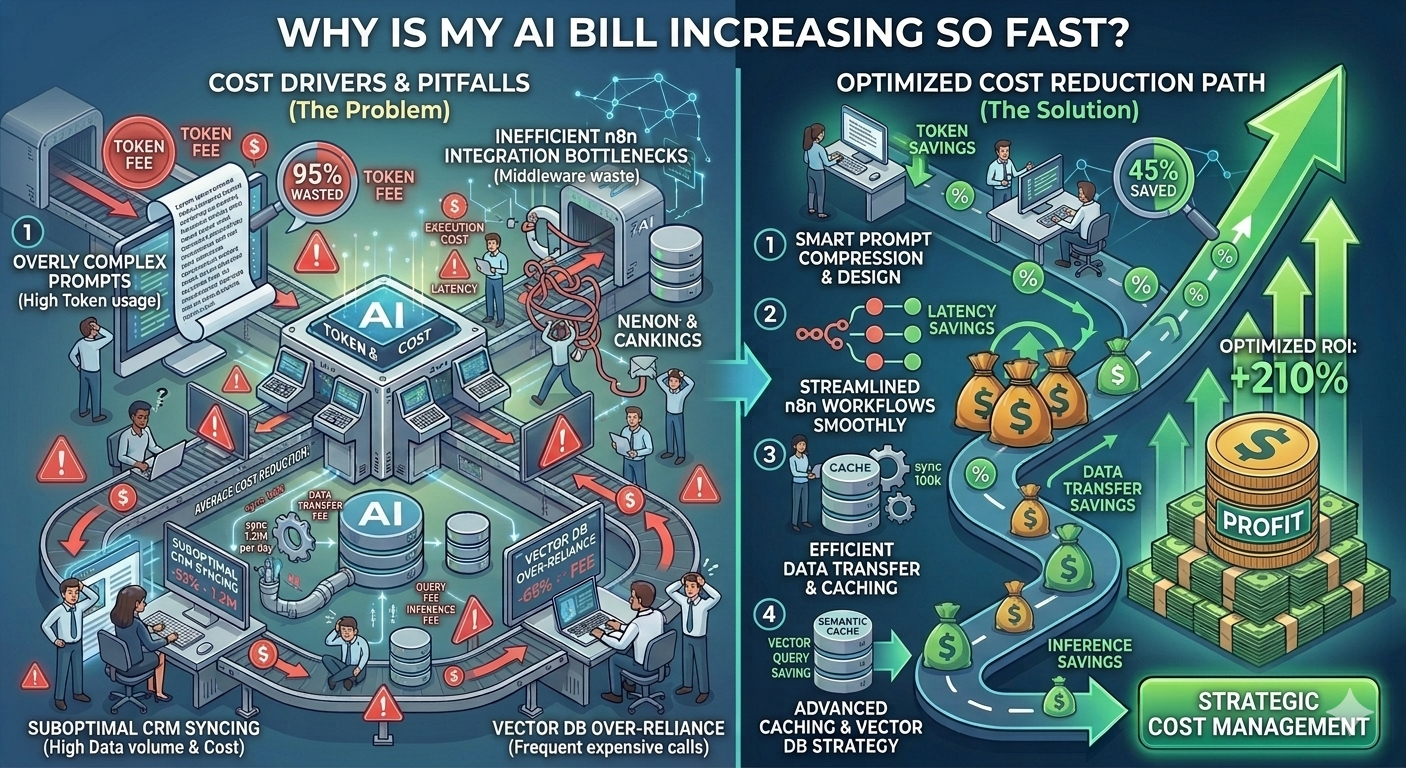
Why is my AI bill increasing so fast?

Why is my AI bill increasing so fast

Is It Time to Re-Architect Your AI Middleware? 3 Warning Signs of Inefficient Dev Work

Auditing custom SaaS AI, enterprise AI workflow optimization

Most companies don’t realize their AI systems are inefficient until the bill becomes impossible to ignore.

By that point, the problem is no longer about β€œoptimizing prompts” β€” it becomes a structural issue in how the entire middleware is designed.

This is where auditing custom SaaS AI systems becomes critical, especially when early architectural mistakes start scaling into enterprise-level cost leakage.


The Real Problem: AI Cost Issues Are Usually Architectural, Not Operational

If your AI system is expensive, it’s rarely because of the model itself.

It’s because your workflow design is forcing unnecessary repeated computation.

This is a key blind spot in enterprise AI workflow optimization β€” and it often indicates that the system has outgrown the original developer’s architectural approach.


Warning Sign #1: Your AI Bill Scales Linearly With User Growth

In a well-optimized AI system, costs should not grow one-to-one with users.

Instead, intelligent systems introduce reuse layers such as:

  • semantic caching
  • response reuse
  • batch processing
  • deduplicated inference

If your system is not doing this, every new user equals a new full LLM cost cycle.

That means:

  • more users β†’ more identical prompts
  • more prompts β†’ more redundant token usage
  • more scale β†’ exponential cost exposure

This is one of the clearest indicators that your middleware is not optimized for AI FinOps principles.


Warning Sign #2: Simple Tasks Take More Than 10 Seconds

If your system takes 10+ seconds to process basic operations like:

  • data extraction
  • ticket classification
  • lead summarization
  • record enrichment

then something deeper is wrong.

In modern architectures, these tasks should be near-instant unless an LLM call is unavoidable.

Common causes include:

  • unoptimized prompt chains
  • multiple sequential LLM calls per request
  • lack of caching or pre-processing layers
  • overloaded middleware logic (n8n, custom APIs, etc.)

This is where poor enterprise AI workflow optimization becomes a performance bottleneck β€” not just a cost issue.


Warning Sign #3: Repeated Identical Prompts in Logs

This is the most expensive and most ignored issue.

If you inspect your logs and see:

  • identical system prompts
  • same context payloads
  • repeated user queries with similar structure

appearing thousands of times, your system is effectively:

paying full price for the same intelligence repeatedly

This usually happens when there is:

  • no semantic caching layer
  • no request deduplication
  • no memory-based lookup system

At scale, this becomes one of the biggest hidden costs in AI-powered SaaS platforms.


The Hidden Root Cause: Lack of AI FinOps Thinking

Most development teams build AI systems like traditional software systems.

But LLM-based systems require a different mindset:

  • every call has variable cost
  • repetition directly equals financial waste
  • context size directly impacts billing

If your architecture does not account for this, costs will scale uncontrollably.

This is where AI FinOps becomes essential β€” not optional.


What a Properly Optimized AI Middleware Should Look Like

A cost-efficient system typically includes:

  • semantic caching layer (meaning-based reuse)
  • request deduplication engine
  • context compression before LLM calls
  • event-driven processing instead of full recomputation

This ensures that the system only calls the LLM when necessary β€” not by default.


How Enterprises Accidentally Waste Thousands Monthly

Most AI cost leaks come from a simple pattern:

  • workflow triggers β†’ full context rebuild β†’ LLM call β†’ no reuse

When multiplied across:

  • support tickets
  • CRM updates
  • lead scoring
  • document processing

The waste becomes massive β€” often without anyone noticing until invoices arrive.


When You Should Seriously Consider Re-Architecting

You should evaluate a full redesign if:

  • AI costs are growing faster than revenue
  • you cannot explain token usage per workflow step
  • your system has no caching or memory layer
  • performance is inconsistent under load

At that point, optimization is no longer enough β€” architecture redesign becomes necessary.


Why Work With Me?

I specialize in auditing custom SaaS AI systems and rebuilding them for cost efficiency and scalability through:

  • enterprise AI workflow optimization
  • AI FinOps architecture design
  • semantic caching implementation
  • middleware performance restructuring
  • LLM cost reduction strategies
  • high-scale CRM automation systems

The goal is to stop waste at the architectural level β€” not just the prompt level.


Frequently Asked Questions (FAQ)

Q: Why is my AI bill increasing so fast?
Because your system likely repeats LLM calls without caching or deduplication as usage scales.

Q: What is AI FinOps?
It is the practice of optimizing financial efficiency in AI systems by reducing unnecessary model usage and token waste.

Q: How do I know if my middleware is inefficient?
If costs scale linearly, tasks are slow, or prompts are repeated frequently in logs, your system likely needs re-architecture.

Q: Can prompt optimization solve this problem?
Only partially. Most cost issues are architectural, not prompt-level.

Q: What is enterprise AI workflow optimization?
It is the process of redesigning AI systems for efficiency, reuse, caching, and minimal LLM dependency.


Get a Free AI Middleware Audit Checklist

To help identify inefficiencies in your system, I offer a free AI Middleware Audit Checklist that highlights:

  • cost leakage points
  • duplicate LLM calls
  • missing caching layers
  • workflow bottlenecks

πŸ“© Request your audit checklist on Upwork

🎯 Get enterprise AI optimization consulting on Fiverr


AI automation in ERP & intelligent process automation enterprise

AI automation in ERP & intelligent process automation enterprise custom crm developer custom saas developer

Beyond If/Then Rules: How Multi-Agent AI Environments Are Transforming Enterprise Process Automation

AI automation in ERP, intelligent process automation enterprise, autonomous CRM workflows

Most enterprise automation today is still built on a simple idea:

β€œIf this happens, then trigger that action.”

It works β€” but only up to a point.

In 2026, enterprises are discovering a much deeper shift: moving from rule-based workflows to autonomous AI systems that can understand, decide, and execute complex business processes inside ERP and CRM environments.

This is where AI automation in ERP stops being β€œworkflow automation” and becomes something closer to digital operations intelligence.


The Limitation of Traditional Automation (Why If/Then Is Not Enough)

Classic automation tools in ERP and CRM systems are built around predefined triggers:

  • Status changes β†’ send email
  • Invoice created β†’ notify finance team
  • Form submitted β†’ create CRM lead

This approach is predictable β€” but rigid.

It fails when real-world data becomes:

  • unstructured
  • incomplete
  • inconsistent
  • context-dependent

And in enterprise operations, most critical data is exactly that.


The Shift: From Automation to Autonomous AI Agents

Modern enterprises are now moving toward intelligent process automation enterprise systems powered by multi-agent AI environments.

Instead of single-step rules, AI agents can:

  • interpret documents
  • extract structured meaning
  • validate against business rules
  • take corrective action
  • log audit trails automatically

This is not automation reacting to events β€” it is systems making operational decisions.


What a Multi-Agent AI ERP Actually Looks Like

In an AI-powered ERP architecture, multiple specialized agents work together:

  • Ingestion Agent – collects incoming data (emails, PDFs, APIs)
  • Extraction Agent – converts unstructured data into structured records
  • Validation Agent – checks compliance against contracts or policies
  • Decision Agent – flags anomalies or approves normal transactions
  • Ledger Agent – posts clean data into financial systems

Each agent operates independently but collaborates within a controlled workflow.

This is the foundation of next-generation AI automation in ERP.


Real Example: Vendor Invoice Processing Without Human Touch

Let’s take a real enterprise scenario.

A vendor sends an unstructured PDF invoice via email.

In a traditional ERP system:

  • accounting team downloads PDF
  • manually enters data
  • cross-checks contract terms
  • flags issues manually
  • posts entry into ledger

Now compare this with an AI-native ERP system:


Step 1: Intelligent Ingestion

The system automatically detects incoming vendor emails and extracts attached PDFs.


Step 2: Advanced Data Extraction

An AI extraction engine reads the invoice like a human:

  • vendor details
  • line items
  • tax breakdown
  • payment terms

Even if formats differ across vendors, the system adapts dynamically.


Step 3: Contract Intelligence Check

The AI compares invoice data against stored contract rules:

  • price variance detection
  • overbilling identification
  • duplicate invoice detection
  • payment term validation

This is where autonomous CRM workflows begin extending into finance operations.


Step 4: Anomaly Detection

If something looks incorrect, the system:

  • flags it automatically
  • assigns severity score
  • routes it to compliance queue

If everything is valid, it proceeds without human involvement.


Step 5: Auto Posting to Financial Ledger

Clean, validated data is pushed directly into the ERP ledger system.

No manual entry.

No spreadsheet reconciliation.

No delay cycles.


Why This Is Different From Traditional Automation

Traditional automation:

  • follows rules
  • requires predefined conditions
  • breaks when formats change

AI multi-agent systems:

  • interpret context
  • adapt to new formats
  • make probabilistic decisions
  • learn from historical patterns

This is the difference between automation and intelligence.


Enterprise Impact of AI Automation in ERP

Organizations implementing AI-driven ERP workflows typically see:

  • 60%–90% reduction in manual processing tasks
  • significant drop in invoice errors
  • faster financial close cycles
  • improved compliance accuracy
  • real-time operational visibility

The biggest shift is not cost reduction β€” it is operational autonomy.


Why Multi-Agent Systems Are Replacing Single Workflow Engines

Legacy automation tools struggle with complexity because they assume one system controls all logic.

But enterprise reality is distributed.

Multi-agent AI systems solve this by:

  • dividing intelligence into specialized roles
  • running parallel reasoning processes
  • coordinating outputs through a central orchestrator

This allows ERP systems to behave more like adaptive ecosystems than rigid software.


Where This Is Already Being Used

AI-powered ERP automation is being adopted in:

  • finance & accounting systems
  • procurement pipelines
  • supply chain management
  • enterprise CRM operations
  • compliance-heavy industries

Especially in enterprises dealing with high-volume document workflows.


The Strategic Advantage: Removing Human Bottlenecks

In traditional systems, humans are the processing layer between systems.

In AI-native systems, humans become exception handlers, not data processors.

This fundamentally changes:

  • cost structure
  • operational speed
  • error rates
  • scalability limits

Why Work With Me?

I design and build AI-powered enterprise systems focused on:

  • AI automation in ERP workflows
  • intelligent process automation enterprise systems
  • autonomous CRM workflows
  • multi-agent AI architecture design
  • document intelligence pipelines (PDF, invoices, contracts)
  • API-first ERP modernization

The goal is to transform static business systems into autonomous operational environments.


Frequently Asked Questions (FAQ)

Q: What is AI automation in ERP?
It is the use of artificial intelligence to automate complex enterprise workflows like finance, procurement, and CRM operations beyond simple rule-based triggers.

Q: How is multi-agent AI different from traditional automation?
Traditional automation uses fixed rules, while multi-agent systems use specialized AI components that interpret, decide, and execute tasks dynamically.

Q: Can AI process unstructured documents like PDFs?
Yes. Modern AI systems can extract structured data from invoices, contracts, and vendor documents automatically.

Q: What are autonomous CRM workflows?
These are CRM processes where AI agents manage lead scoring, follow-ups, segmentation, and engagement without manual intervention.

Q: Is AI ERP automation replacing humans?
No. It reduces repetitive tasks and allows humans to focus on exceptions, strategy, and decision-making.


Get the AI Readiness Assessment Matrix

To help enterprises evaluate their automation maturity, I’ve created a private AI Readiness Assessment Matrix.

It helps you identify:

  • which workflows can be automated immediately
  • where AI agents add the most ROI
  • which processes are blocking scalability
  • how close your ERP is to autonomous operation

πŸ“© Request the AI Readiness Assessment on Upwork

🎯 Get implementation support on Fiverr


Custom Enterprise CRM ERP SAAS Development

Custom enterprise ERP development, enterprise CRM ROI, legacy ERP inefficiencies

“`html id=”x9c2kq”

The Per-Seat SaaS Tax: Why Enterprises Are Abandoning Salesforce and NetSuite for Custom Core Software

Custom enterprise ERP development, enterprise CRM ROI, legacy ERP inefficiencies

For years, enterprise software was sold as the safest choice:

β€œJust subscribe, scale users, and let the platform handle everything.”

But in 2026, many large organizations are quietly discovering a different reality β€” one where β€œscaling” SaaS platforms like
:contentReference[oaicite:0]{index=0} and
:contentReference[oaicite:1]{index=1} actually introduces long-term inefficiencies, not freedom.

This is where the concept of the per-seat SaaS tax becomes unavoidable.


The Hidden Cost Model: Why β€œPer User Pricing” Becomes a Trap

Most enterprise SaaS platforms follow a simple model:

  • pay per user seat
  • pay per module
  • pay for add-ons
  • pay for integrations

At small scale, this feels manageable.

At enterprise scale, it becomes a permanent tax on growth.

As companies expand, they face:

  • rising license costs every quarter
  • inactive or low-usage paid accounts
  • duplicated roles across departments
  • overlapping SaaS subscriptions

This is the foundation of enterprise CRM ROI degradation.


The Real Problem: Subscription Bloat Across the Enterprise Stack

Modern enterprises rarely use just one system.

Instead, they operate a fragmented stack:

  • CRM (Salesforce, HubSpot, Dynamics)
  • ERP (NetSuite, SAP, Oracle)
  • HR systems
  • billing platforms
  • custom analytics tools
  • external middleware

Each system has its own:

  • data model
  • authentication layer
  • pricing structure
  • integration limitations

Over time, companies end up paying for software that does not fully communicate with itself.


The Invisible Cost: Middleware Complexity

To make systems talk to each other, enterprises often build or buy middleware layers:

  • Zapier-style automation tools
  • custom API bridges
  • integration platforms (iPaaS)
  • internal microservices glue code

But this introduces a new problem:

β€œYou are paying to maintain the systems you already paid to integrate.”

Each layer adds:

  • latency
  • failure points
  • maintenance cost
  • data inconsistency risks

This is one of the biggest drivers of legacy ERP inefficiencies.


Why Enterprises Are Reconsidering Custom Core Systems

Instead of stacking tools, many organizations are shifting toward:

custom enterprise ERP development β€” unified systems built around their exact workflows, not generic SaaS constraints.

This approach eliminates:

  • seat-based pricing models
  • feature limitations
  • vendor lock-in constraints
  • integration dependency chains

Instead, companies gain a single, unified operational core.


The Core Argument: SaaS Optimizes for Vendors, Not Enterprises

Traditional enterprise SaaS platforms are designed to scale vendor revenue, not operational efficiency.

That means:

  • pricing scales with headcount, not value delivered
  • features are modular and gated
  • integrations are paid extensions

As a result, enterprises often end up optimizing their operations around software limitations rather than business logic.


The Alternative: Unified Custom CRM/ERP Ecosystems

Modern custom systems replace fragmented SaaS stacks with a single architecture:

  • one data model
  • one authentication system
  • one reporting engine
  • one workflow layer

This is the foundation of modern custom enterprise ERP development.

Instead of paying per seat, companies invest in:

  • infrastructure ownership
  • scalable backend architecture
  • API-first design systems

What Gets Eliminated in Custom ERP Systems

When enterprises move away from legacy SaaS stacks, they typically eliminate:

  • per-user licensing fees
  • redundant SaaS subscriptions
  • middleware dependency chains
  • manual data reconciliation processes

More importantly, they eliminate operational fragmentation.


ROI Shift: From Subscription Spending to Asset Building

In SaaS models:

  • money flows out continuously
  • ownership remains with vendors

In custom systems:

  • initial build cost is higher
  • long-term cost stabilizes
  • system becomes a company asset

This is where enterprise CRM ROI fundamentally changes.


Why Large Companies Are Quietly Moving Away From Big Platforms

Enterprises don’t publicly β€œquit” platforms like Salesforce or NetSuite overnight.

Instead, they gradually transition through:

  • partial system replacement
  • hybrid internal tools
  • custom workflow engines
  • data layer abstraction

Over time, the SaaS stack becomes a thin layer β€” not the core system.


The Future: Enterprise Systems as Custom Infrastructure

The shift is clear:

Companies are moving from:

  • software subscription dependency

to:

  • owned digital infrastructure

This enables:

  • full control over workflows
  • optimized business logic
  • removal of artificial pricing constraints
  • scalable internal ecosystems

Why Work With Me?

I design and build high-performance custom enterprise systems focused on eliminating SaaS dependency and optimizing operational architecture through:

  • custom enterprise ERP development
  • API-first CRM systems
  • legacy system modernization
  • real-time data synchronization layers
  • scalable backend architecture (Laravel, Node.js)
  • integration replacement for SaaS-heavy stacks

The goal is not just to build software β€” but to replace subscription overhead with long-term system ownership.


Frequently Asked Questions (FAQ)

Q: What is the per-seat SaaS tax?
It refers to increasing costs enterprises pay as user counts grow in SaaS platforms like CRM and ERP systems.

Q: Why are companies moving away from Salesforce and NetSuite?
Due to rising licensing costs, integration complexity, and limited flexibility at scale.

Q: Is custom ERP development expensive?
Initial cost is higher, but long-term ROI is often significantly better due to elimination of recurring SaaS fees.

Q: What are legacy ERP inefficiencies?
They include slow integrations, rigid workflows, high licensing costs, and fragmented data systems.

Q: Can custom systems fully replace SaaS platforms?
Yes, many enterprises gradually replace SaaS tools with unified custom-built platforms tailored to their workflows.


Ready to Escape Subscription Bloat?

If your organization is dealing with:

  • rising SaaS licensing costs
  • fragmented CRM/ERP systems
  • complex middleware dependencies
  • limited customization options
  • low enterprise CRM ROI

πŸ“© Book a consultation on Upwork

🎯 Discuss custom enterprise ERP development on Fiverr