Why Multi-Site Real Estate Networks are Moving to Centralized Data Orchestration
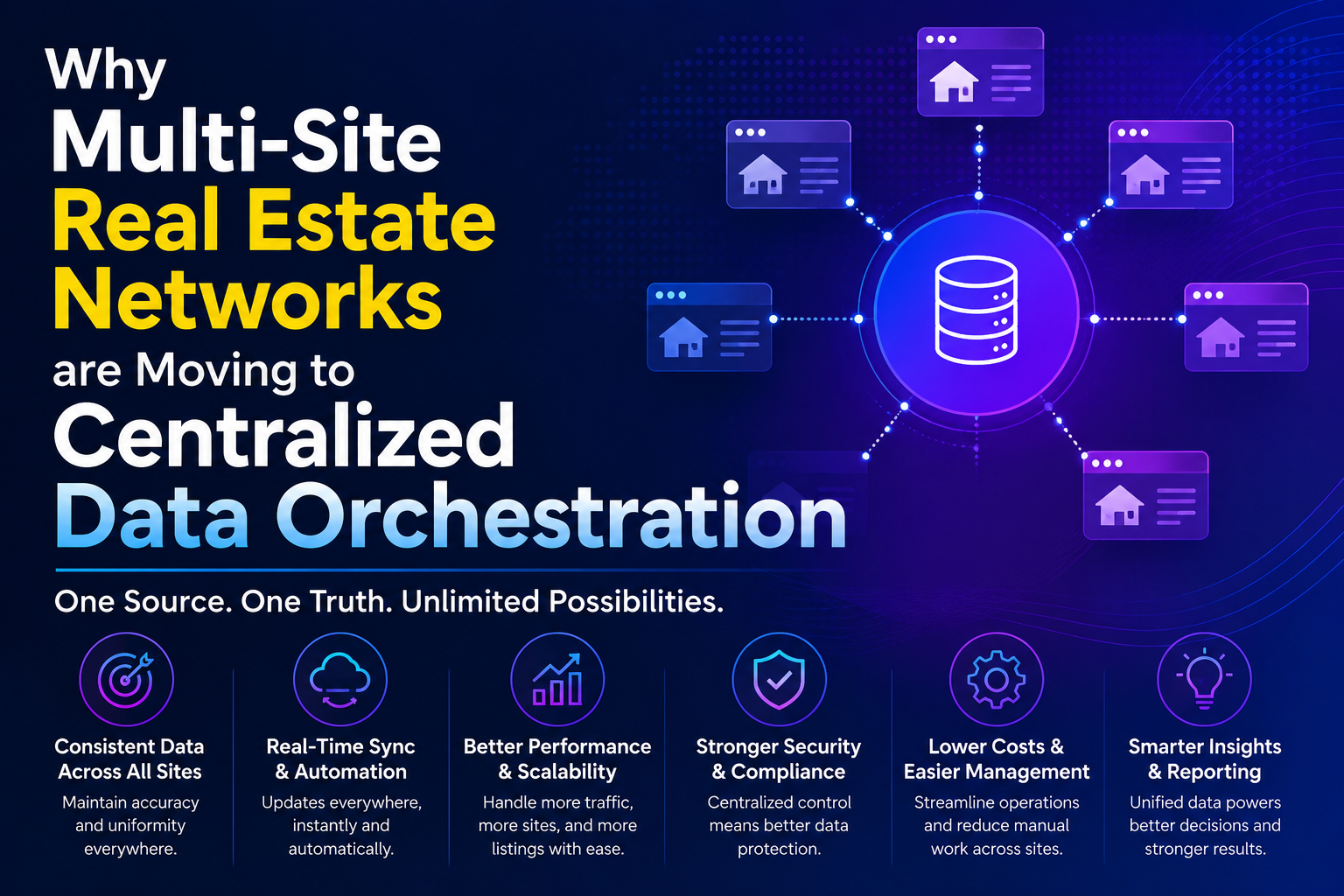
Beyond Cron Jobs: Why Modern Real Estate Networks Are Moving Toward Centralized Property Data Orchestration
In 2026, real estate agencies, property marketplaces, and multi-site developers are no longer relying solely on fragmented WordPress import plugins and unstable cron-based synchronization systems.
As property businesses scale into multi-region networks, agent-specific microsites, franchise ecosystems, and SEO-focused location portals, traditional import workflows become increasingly difficult to manage.
Many agencies initially build their infrastructure using familiar tools like:
- WP All Import
- Houzez XML feed imports
- WordPress cron jobs
- Custom CSV parsers
- Standalone synchronization plugins
These tools may work well for a single website with a limited inventory. However, once businesses begin managing:
- Multiple property sources
- Several frontend websites
- Agent-specific inventories
- Regional SEO landing pages
- Real-time lead routing
- Large media libraries
…the entire architecture often becomes unstable, fragmented, and operationally expensive.
This is why modern real estate companies are now moving toward centralized property data orchestration systems instead of maintaining disconnected import plugins on every website.
The Problem With Traditional Real Estate Import Plugins
Most real estate synchronization setups are decentralized.
Each WordPress website independently:
- Fetches XML or JSON feeds
- Processes images locally
- Runs cron-based imports
- Maps custom fields separately
- Stores isolated lead data
- Maintains separate synchronization rules
This architecture introduces major scalability problems.
Server Resource Exhaustion
Large real estate feeds often contain:
- Thousands of listings
- High-resolution image galleries
- Complex metadata
- Multi-language descriptions
- Virtual tours
- Agent relationships
When multiple WordPress websites attempt to process these imports simultaneously using cron jobs, servers frequently experience:
- Timeouts
- Memory overload
- Partial imports
- Database corruption
- Broken image synchronization
- Slow frontend performance
As networks scale, the hosting environment becomes the bottleneck.
The Multi-Site Configuration Nightmare
In decentralized systems, every website requires its own:
- Import schedules
- Feed mappings
- Category structures
- Field transformations
- Agent assignment logic
- Synchronization settings
If a supplier or CRM changes a feed structure even slightly, the entire synchronization process may silently fail across multiple websites.
Teams then spend hours troubleshooting:
- Broken imports
- Missing listings
- Incorrect prices
- Duplicate properties
- Image mapping failures
- Expired listings remaining live
The Duplicate Content SEO Problem
One of the biggest issues in modern real estate SEO is duplicate listing content.
Traditional import plugins typically publish raw CRM data directly across multiple domains.
This creates:
- Duplicate property titles
- Identical descriptions
- Repeated metadata
- Low-content pages
- Weak local SEO performance
Search engines increasingly penalize networks publishing identical inventory across multiple websites without content differentiation.
As a result:
- Organic rankings decline
- Indexation quality drops
- Local pages lose visibility
- Lead acquisition costs increase
What Is Centralized Real Estate Data Orchestration?
A centralized orchestration platform completely changes how real estate synchronization works.
Instead of every website independently processing feeds, all property data flows into a single centralized cloud engine.
This orchestration hub becomes the control center for:
- Feed ingestion
- Data normalization
- AI rewriting
- Inventory distribution
- Lead aggregation
- Agent assignment
- Website synchronization
Modern Multi-Source Distribution Architecture
[CRM Sources A, B, C]
          ↓
[Central Cloud Synchronization Engine]
          ↓
 ├──► Website X → Agent J
 ├──► Website Y → Agent K
 └──► Website Z → Source-Specific Routing
This architecture gives businesses complete operational flexibility.
Cross-Network Property Distribution
A centralized engine allows agencies to:
- Distribute one source to multiple websites
- Assign listings to specific agents automatically
- Create hyper-local inventory segmentation
- Filter listings by region or category
- Control visibility across entire site networks
Instead of manually configuring each website individually, businesses manage the entire ecosystem from one dashboard.
Cloud-Based Processing Eliminates Server Load
Modern orchestration systems move heavy processing away from WordPress hosting environments.
The centralized engine handles:
- Feed parsing
- Image optimization
- Field transformations
- Data normalization
- AI content generation
- Background synchronization
This dramatically reduces:
- Frontend lag
- Import failures
- Server crashes
- Database stress
- Cron job instability
AI-Powered Property Rewriting for SEO Differentiation
One of the biggest advantages of centralized orchestration is the ability to optimize content dynamically before listings are published.
Modern systems integrate directly with AI providers such as:
- OpenAI ChatGPT
- Claude (Anthropic)
- Google Gemini
This enables automatic generation of:
- SEO-optimized property titles
- Localized descriptions
- Unique listing variations
- Metadata generation
- Schema enhancements
- Agent-focused content personalization
Dynamic Content Transformation Workflow
[Raw XML / CRM Listing]
          ↓
[AI Processing Layer]
          ↓
[Unique SEO-Optimized Listing]
Instead of publishing:
3 Bedroom Villa in Marbella With Pool
The system can generate:
Luxury 3 Bedroom Marbella Villa With Private Pool Near Golf Resorts
This improves:
- SEO rankings
- Local search visibility
- Google index quality
- CTR performance
- Content uniqueness
Bring Your Own AI API Keys
Modern synchronization platforms often support BYOK (Bring Your Own Key) architecture.
This allows agencies to connect their own:
- OpenAI API keys
- Claude API keys
- Gemini API keys
Advantages include:
- Lower operational costs
- Direct API billing control
- Unlimited scaling flexibility
- Custom AI prompt engineering
- Multi-model experimentation
Reverse Lead Aggregation: Centralizing Buyer Inquiries
Listing synchronization is only one part of the pipeline.
The real business value comes from lead management.
Traditional real estate networks often scatter leads across:
- Separate WordPress databases
- Individual agent inboxes
- Disconnected CRM systems
- Fragmented contact forms
This creates operational blind spots and slows down sales response times.
Unified Lead Command Dashboard
Centralized orchestration systems aggregate all inquiries into one dashboard.
This enables:
- Cross-network lead tracking
- Source attribution analysis
- Agent assignment automation
- Lead prioritization
- Pipeline visibility
- Performance reporting
Advanced Lead Filtering
Teams can instantly filter leads based on:
- Website source
- Landing page
- Original feed provider
- Agent ownership
- Region
- Property category
This gives management precise visibility into which channels generate the highest ROI.
Automated Lead Status Pipelines
Modern systems dynamically organize prospects using labels such as:
- HOT
- Warm
- Cold
- Qualified
- Follow-Up Required
This helps sales teams prioritize high-conversion opportunities immediately.
Real-Time Automation Triggers
The moment a lead enters the system, automation workflows can instantly trigger:
- Email sequences
- WhatsApp notifications
- CRM integrations
- Agent alerts
- Viewing confirmations
- Property brochure delivery
Fast response times significantly improve lead conversion rates.
Why the Industry Is Moving Beyond Cron Jobs
The real estate industry is evolving toward:
- Cloud-native synchronization
- Centralized orchestration layers
- AI-powered content generation
- Real-time multi-site distribution
- Unified lead intelligence systems
- Scalable middleware infrastructure
Agencies still relying on disconnected import plugins often face:
- High maintenance overhead
- Operational inefficiencies
- SEO limitations
- Lead fragmentation
- Scaling bottlenecks
Why HZ Feed Syncer / Homeza APP Changes the Architecture Completely
HZ Feed Syncer and Homeza APP are designed specifically for modern real estate networks that require:
- Multi-source synchronization
- Multi-site distribution
- AI-powered listing optimization
- Cloud-based processing
- Centralized lead aggregation
- Agent-specific routing
- High-volume synchronization
Instead of managing multiple fragile plugins across separate WordPress installations, businesses operate everything from a unified orchestration layer.
The result is:
- Faster synchronization
- Lower server load
- Improved SEO performance
- Better operational visibility
- Centralized inventory management
- More efficient lead handling
Conclusion: Stop Managing Imports. Start Orchestrating Your Entire Real Estate Ecosystem.
The future of real estate infrastructure is no longer based on isolated cron jobs and disconnected import plugins.
Modern agencies require:
- Centralized synchronization
- Scalable cloud processing
- AI-powered content optimization
- Unified lead intelligence
- Real-time inventory orchestration
By moving toward a centralized platform like HZ Feed Syncer / Homeza APP, agencies can unify property sources, websites, agents, and lead pipelines into one scalable ecosystem.
Instead of spending hours troubleshooting imports, your team can focus on growth, SEO expansion, and closing deals.
Ready to Modernize Your Real Estate Infrastructure?
If you need:
- Multi-site property synchronization
- Houzez feed automation
- WP All Import replacement systems
- AI-powered property rewriting
- Real-time lead aggregation
- Centralized real estate orchestration
- Cloud-based property synchronization infrastructure
📩 Contact me on Upwork to discuss your project.
🎯 Order on Fiverr for advanced real estate synchronization and orchestration services.